


Both at home and around your house of worship, there are many modest, low-cost actions you can take to decrease your energy consumption. Not only is this good for the planet, but it saves you money. Massachusetts has some of the highest energy costs and rates in the country.
Here are 5 actions you can take for little or no money, and without hiring a professional. Each one of these actions saves a little bit on some of the biggest energy users in your home or house of worship. With just a few minutes of effort you may reduce your energy consumption by 10% or more.
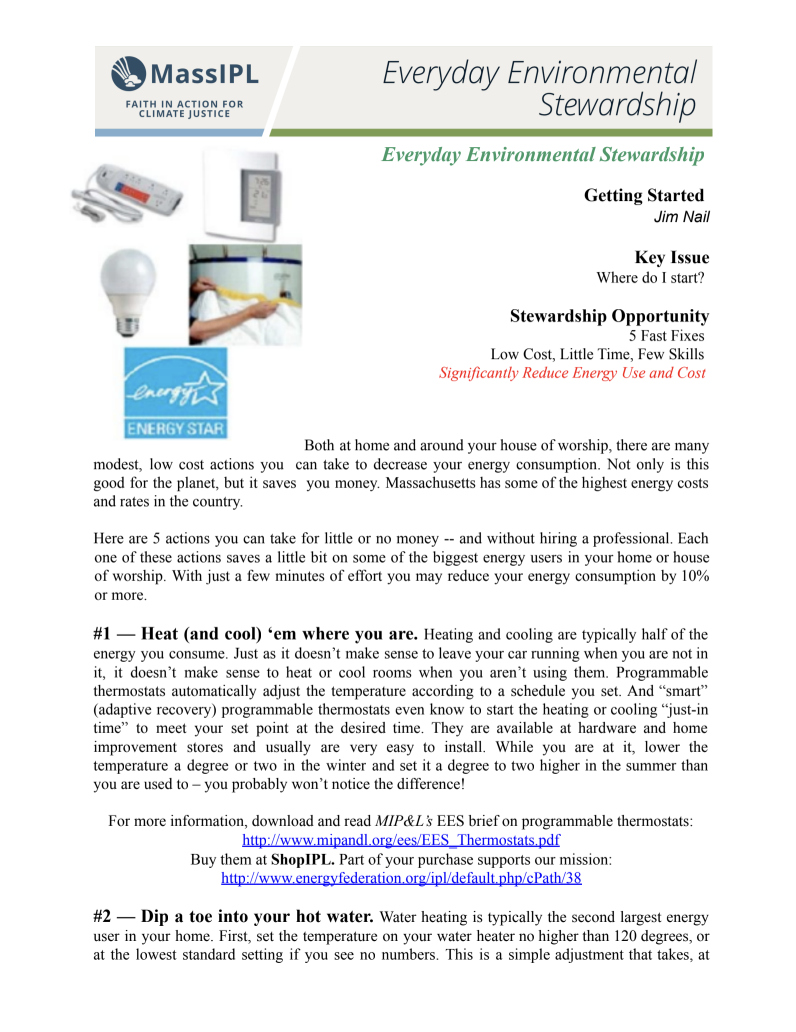
Heating and cooling are typically half of the energy you consume. Just as it doesn't make sense to leave your car running when you are not in it, it doesn't make sense to heat or cool rooms when you aren't using them. Programmable thermostats automatically adjust the temperature according to a schedule you set. And "smart" (adaptive recovery) programmable thermostats even know to start the heating or cooling "just-in-time" to meet your set point at the desired time. They are available at hardware and home improvement stores and usually are very easy to install. While you are at it, lower the temperature a degree or two in the winter and set it a degree or two higher in the summer than you are used to. You probably won't notice the difference!
For more information, download and read MassIPL's EES brief on programmable thermostats: massipl.org/ees/programmable-thermostats
Water heating is typically the second largest energy user in your home. First, set the temperature on your water heater no higher than 120 degrees, or at the lowest standard setting if you see no numbers. This is a simple adjustment that takes, at most, a screwdriver. If the tank feels even slightly warm to the touch, you can save more money by installing an insulation blanket over it. Next, make sure the hot water pipes are also insulated. Insulating sleeves are easy to slip on with no tools. But how you use hot water can also make a big difference:
For more information, download and read MassIPL's EES brief on showering: massipl.org/ees/showering
And when you replace your DHW tank, use On-Demand DHW generation: massipl.org/ees/ondemand-dhw
According to EnergyStar.gov, lighting accounts for about 20% of the typical home's electricity. There's a new technology for lighting now available that uses 80% less electricity than standard incandescent light bulbs: light emitting diode, or LED. They have better light quality than CFLs and last for years. Check product labels for an Energy Star logo and a color temperature around 2700 K to get a quality bulb with the type of light you want.
For more information on LEDs, read MassIPL's EES brief:
TVs, video games, computers and other electronic devices consume about 15% of your electricity. Even when they are "off," they often consume power in standby mode. This "phantom" load is estimated to use 2% of all the electricity in the country. Plug these devices into power strips, then shut off the power strip overnight or when you are away. To make it easier, you can buy a power strip with a timer and program it to shut off overnight and turn on again in the morning. The latest "smart" power strips will even automatically detect when the device is not in use and shut off automatically.
When you are replacing these items, make energy efficiency a key criterion in addition to other features you shop for. www.EnergyStar.gov has great tools to compare different makes and models. P.S. If your refrigerator or hot water heater are more than 10 years old, it may quickly pay back to replace them before they wear out. Energy Star's Refrigerator Retirement Savings Calculator will tell you how much you might save with a new fridge.
For more information on appliances, read MassIPL's Appliances brief:
Massachusetts Interfaith Power & Light has even more Everyday Environmental Stewardship ideas, plus lots of other information and guidance, at massipl.org/ees
February 2014
Want to print, share, or view this article offline? Click the link below to download it as stand-alone file.

Step-by-step guidance on adding storm windows where replacing a window is impossible, impractical, or expensive.
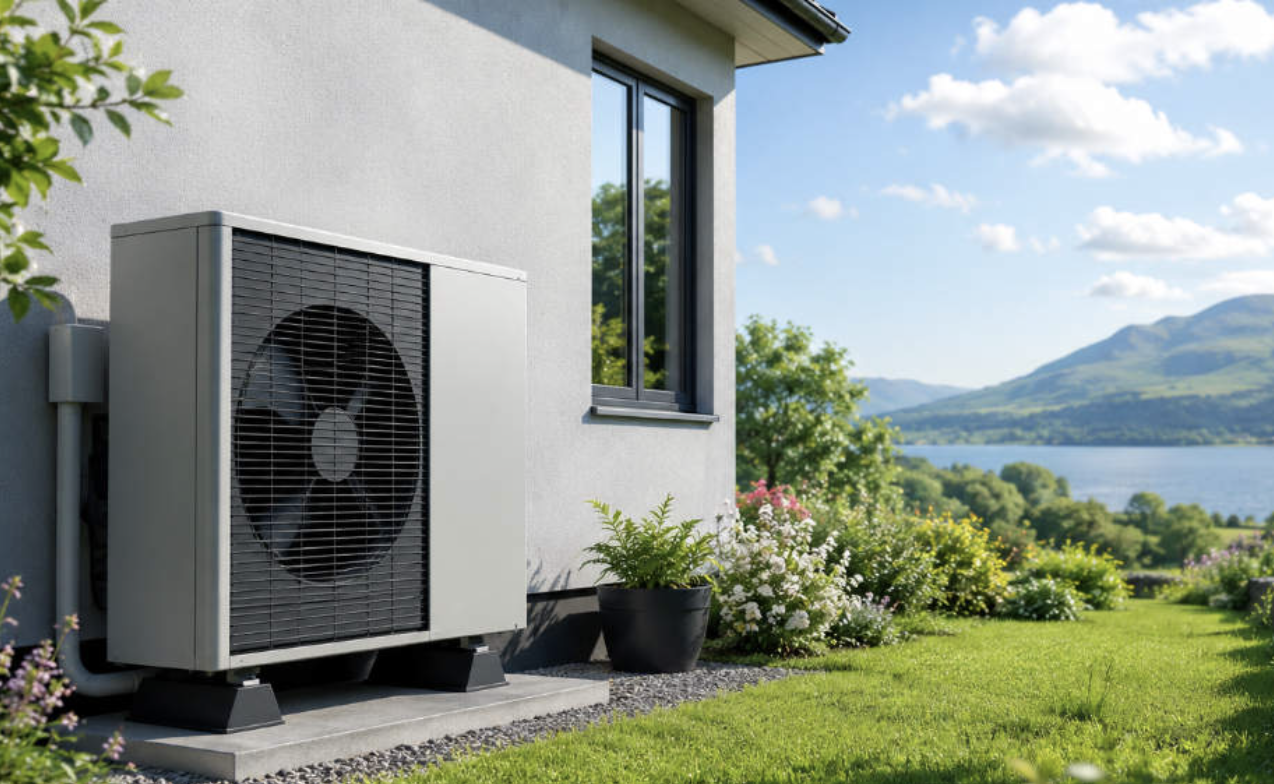
Recent efficiency gains make air-source heat pumps an excellent choice when it is time to replace a boiler or furnace. See how their cost and carbon footprint compare with oil or gas.

How to create a self-funding budget line for energy and water improvements, then reinvest the savings into future upgrades.

