

This document continues the geothermal primer for houses of worship interested in exploring and implementing sustainable heating and cooling solutions for their buildings. It expands on Geothermal Heating and Cooling Part 1: Introduction by comparing geothermal systems with air source heat pumps, outlining practical steps for getting started, examining financing options in greater detail, identifying potential challenges, introducing thermal energy networks, and pointing to additional resources.
Ground source heat pumps (GSHPs), also called geothermal heat pumps, are generally more efficient than air source heat pumps (ASHPs) because they exchange heat with the ground, which holds a much more stable temperature year-round than the outside air. As a result, they use less electricity than ASHPs and so are less expensive to operate
While the initial gross cost of a geothermal system will be higher, strong federal and state incentives can help bring the net installation cost essentially in line with conventional options. Under federal incentives, nonprofit houses of worship are eligible for a 30% direct payment on the project, with an additional 10% if materials are sourced domestically and another 10% if the building sits in an "energy community"1. Further rebates are available through Mass Save, a statewide program that incentivizes energy efficiency. These two incentives can be combined to eliminate most, if not all, of the difference in cost between the geothermal system and an air source heat pump system.
Transitioning from a traditional heating system to geothermal will take more time, planning and design work than simply replacing the existing system with newer, similar equipment. A successful geothermal project will unfold in three phases:
As with any major construction project, houses of worship can anticipate some challenges and bumps along the road. Geothermal is a serious undertaking: it took Wellesley Village Church 10 years to go from initial idea to completed project. While it might not take a decade, a congregation should be prepared for a disciplined process that requires significant time and money. They should also expect that construction may disrupt building use, and that unforeseen costs can arise along the way.
Wellesley Village Church took two additional steps to manage these potential challenges. As is a best practice for any major construction project, the church included a contingency budget to cover any unexpected, extra expenses. They took the further step on investing in a more detailed design which allowed them to negotiate a fixed-price contract. Your congregation should consider the tradeoff of investing more in this additional upfront design vs the congregation’s ability and willingness to handle problems that will otherwise only surface during construction. The more thoroughly the building is evaluated before construction begins, the lower the likelihood of unanticipated problems and increased costs.
Networked geothermal (also known as a thermal energy network) is an emerging approach that that provides geothermal heating and cooling to several buildings at once. Unlike an individual system, where a property might have several boreholes that exchange thermal energy only for itself, a networked system uses a designated site or sites for boreholes that serve the entire network. In addition, when some buildings on the network have excess heat, the system can share it with others without drawing on the heat stored in the ground. The thermal energy travels as water through a network of underground pipes to each building, which has its own heat pump.
Networked geothermal can be thought of like a gas utility, except that instead of gas moving to various properties, the pipes move heated or cooled water. For an explanation of networked geothermal and how it is being implemented in a pilot program in Framingham see this video. The success of the Framingham pilot increases the likelihood of networked geothermal systems becoming more common in the future.
While a house of worship installs a geothermal system to heat their building, they should consider designing it with the possibility to connect to a network in the future.
Ground source and air source heat pumps are not the only way to access thermal energy. Thermal energy exists in bodies of water like rivers, lakes, and the ocean, as well as in other buildings, from factories to grocery stores to schools. It is a huge resource that can be tapped to sustainably meet a community's needs. A networked thermal energy system can harness the differences in heat generation and heating and cooling needs among buildings to distribute that energy more efficiently. Thermal energy in all its forms has the potential to be the next step in sustainable heating and cooling.
To discuss the information in this article and to learn more about how geothermal heating and cooling might be appropriate for your house of worship, contact MassIPL on our website or email info@massipl.org
Geothermal Explainers
Wellesley Village Church
Incentives
Want to print, share, or view this article offline? Click the link below to download it as stand-alone file.
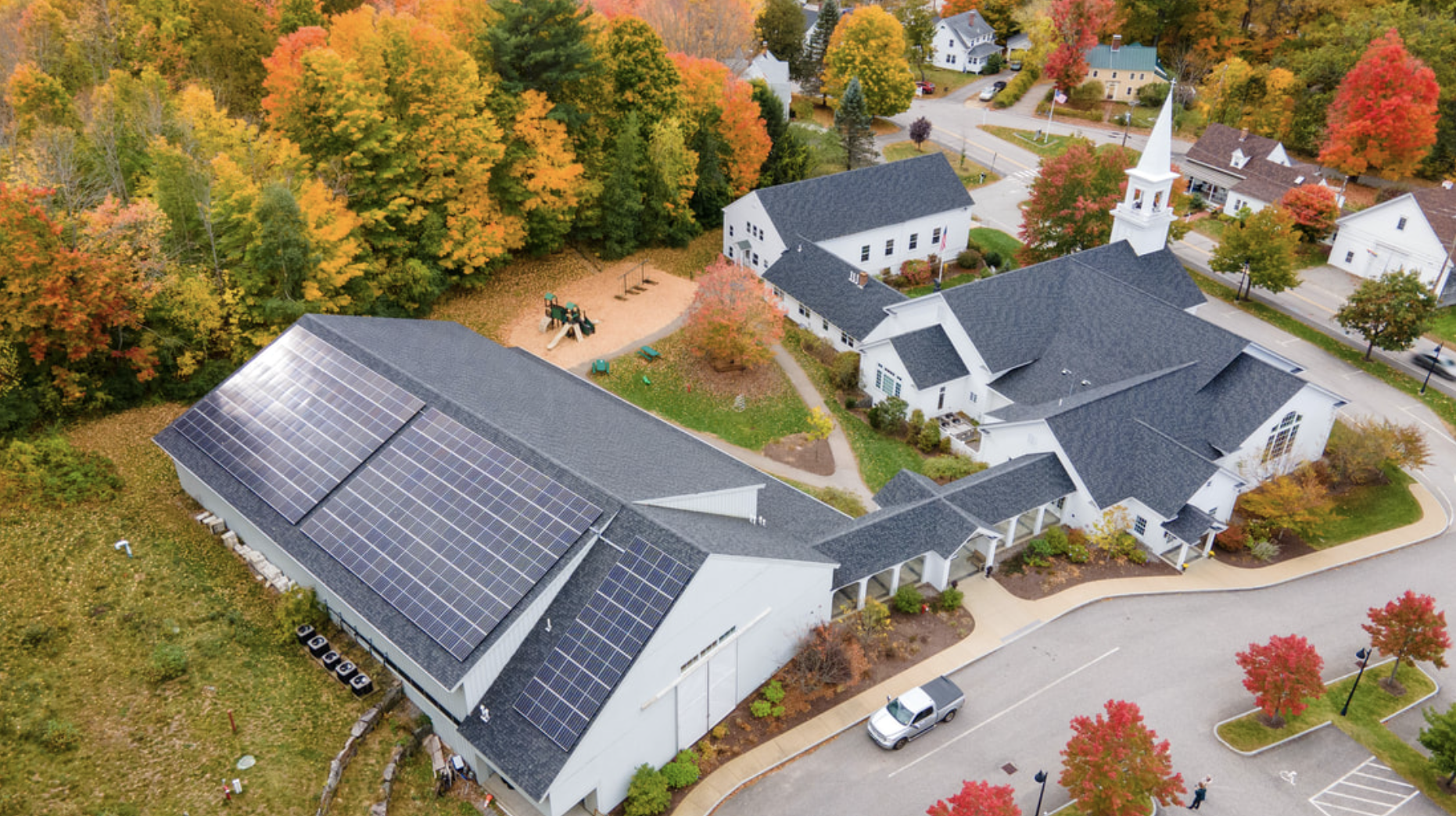
The key characteristics of solar photovoltaic systems and what makes a building a good fit.
.png)
An introduction to how ground-source heat pumps work, how they compare with air-source heat pumps, and why they may offer long-term sustainability and financial benefits.
_page-normal.jpg)
Working through these 24 questions is one of the simplest ways to find where you can cut the most energy for the least effort.

