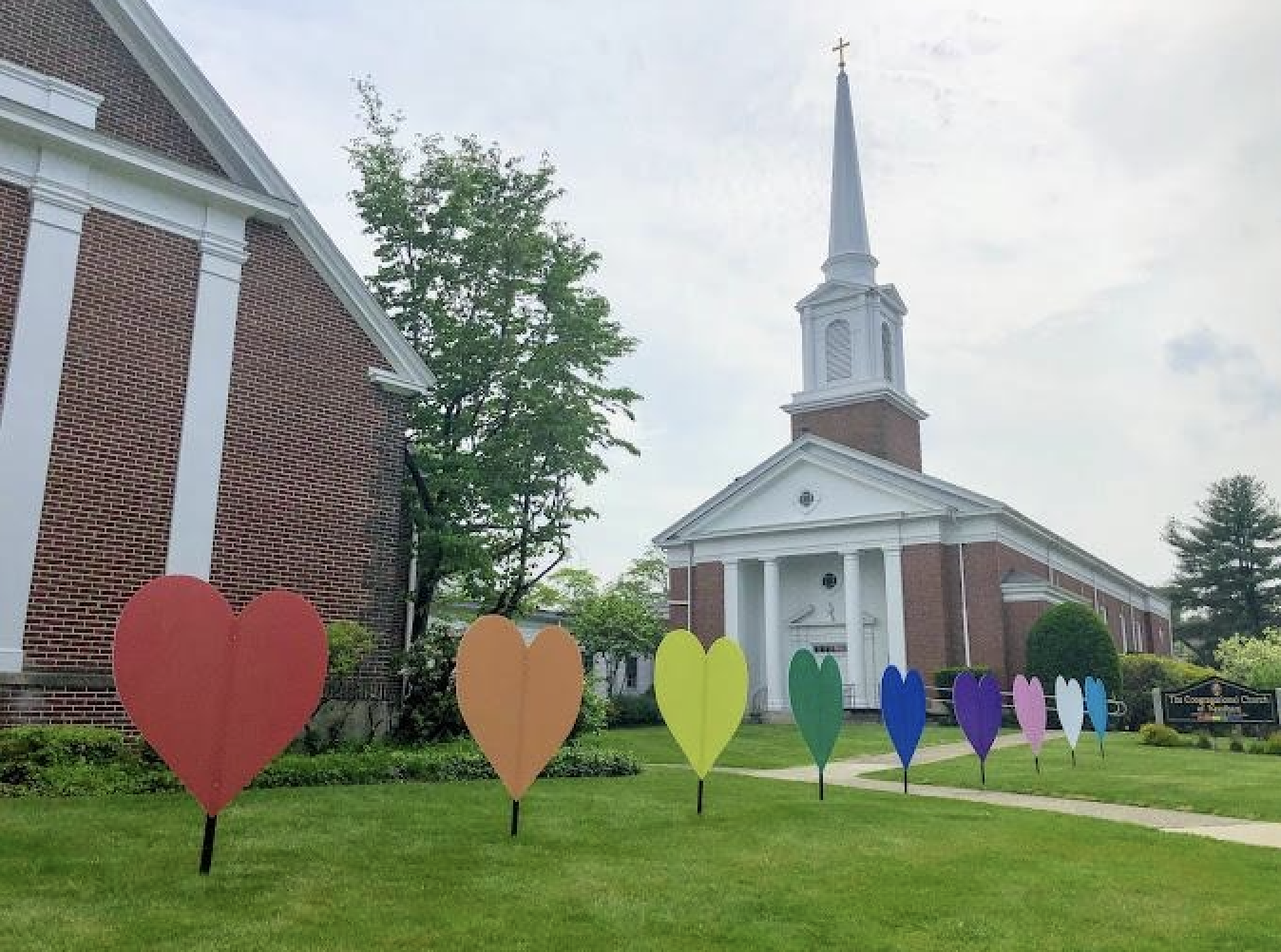


The sustainability journey of the Congregational Church of Needham has followed a long, circuitous series of events rather than a consistent and straightforward plan. However, we have reduced our carbon footprint by 58% through intention and persistence.
The church formed an Environmental Ministries Team (EMT) in 2008. One of our first actions as the EMT, in coordination with the building manager, was to add insulation to the walls and ceilings in 2009—seven truckloads, in fact! The project was supported by a MassSave commercial program that paid 75% of the cost. While this reduced our heating oil use by 16% and carbon footprint by 19%, the benefits were invisible to congregants, except on paper in the reduced utility cost at the annual meeting.
Then, in the early 2010s, the church began a capital campaign for which one of the four goals was energy efficiency. However, no concurrent engineering had been engaged to balance architectural plans. Renderings of a stunning new glass atrium on the north side of the building engaged the congregation, while there was no mention of what it would take to heat the new space. One major problem, EMT inferred, was that energy efficiency was invisible with no chart to show impacts. There was lip service but no measurable goal. That needed to change.
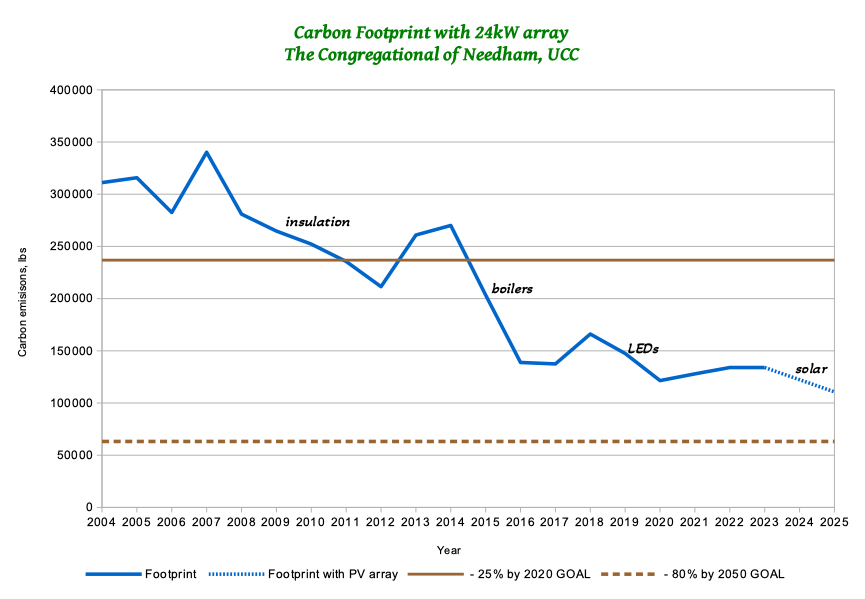
EMT dug into the archives of energy bills to chart it, then requested the Board set a carbon footprint goal of -25% by 2020 and -80% by 2050 (both compared with 2004, as far back as our archives went), aligning with the City of Boston's goals at the time. The Board agreed, and we published our chart widely within the congregation. We could see from the data that, despite the success of the insulation project, fuel oil use was the biggest carbon polluter. Ultimately, the capital campaign design work came to an abrupt halt when the church opted to purchase the building next door instead of building an addition.
With the capital campaign's energy efficiency goal in mind, in 2015 a Board member with a building management background started looking for a partner to replace the approximately 30-year-old, degraded cast iron oil boilers (which had long lost their 80% efficiency rating) with high-efficiency gas-fired ones, and in the process remove the old oil tank and its associated failure risks. He found collaboration with the EMT. He called us in with “Green and Green”: save money and be more sustainable. At the time, Massachusetts Interfaith Power & Light (MassIPL) was promoting high-efficiency gas boilers having MassSave rebates.
While EMT was not keen on the fracking and distribution leaks associated with gas, we decided to support the change, and in the fall we installed 96% efficient Lochinvar boilers. Concurrently, we also upgraded most of the circulators (pumps for the hot water heating) to variable speed ones, reducing the electrical usage associated with heating. The efficiency improvement resulted in a 55% cumulative reduction vs. 2004, well ahead of the 2020 goal adopted by the Board. Financial impact was equally beneficial, reducing heating cost by 75%.
In 2018, we turned our attention to another way to reduce the electricity's contribution to carbon footprint: LED conversion. After consulting a MassSave commercial contractor, we were fortunate to take advantage of a sale that vibed with our Treasurer's favorite f-word: FREE! (Otherwise, it would have been a 10% church participation in the cost.) For well-being, we chose warmer color temperature LEDs to replace existing fluorescents for the spaces used by children's programs, and dark sky compliant lighting outdoors (warm color temperatures and pointed down, etc.). We chose to no longer uplight the steeple, instead putting a warm, welcoming accent on the front porch lighting. The net result was a 30% reduction in electrical usage and cost, contributing to another very nice drop in our carbon footprint for a total reduction of 58% since we started.
Very recently, the flat rubber roof over the church offices required replacement due to increasing leaks. The Property Team, with our EMT representative and a knowledgeable architect in the ranks, took advantage in early 2023 to add a layer of dense foam board underneath the new roof to increase the insulation. This was one area where it was cost-effective to add at replacement time and had not been addressed in 2009 when the other insulation was added. And the insulation work qualified for MassSave subsidies!
Throughout this period, EMT strongly desired visibly fulfilling our faith-based commitment to the environment: installation of a solar array on our south-facing sanctuary roof. Efforts to install solar panels in 2009 (led by Deb Baldwin, the first leader of the EMT) and in 2013 had failed, both principally due to a lack of public support from the church leadership at the time. Future leadership would prove to be more receptive to the idea.
In 2017, a Property Team was revived and structured to include a Board member chairperson and an EMT representative, ensuring environmental thinking in decision-making for the building and grounds. We then once again attempted to install a solar array, under a PPA plan that included financing the re-roofing as we were now cash-strapped due to the purchase of the second property, and the roof still had half its life remaining. We were very close to signing a contract when the installer pulled out, their lawyer flagging an overextension in liability due to the proposed in-house roofing part of the installation.
Currently, we have resurrected the PV array project with, hopefully, all the proverbial stars aligned for a purchase: a supportive permanent senior minister, a motivated Board member to champion the effort, improved finances after having sold the building next door, the Inflation Reduction Act's Direct Pay program for a 30% “credit” on a purchase, and a significant solar fund in memory of Deb Baldwin, who passed away earlier this year. We decided this time to first garner sincere Board support through an estimating process, and believe we are within reach of that ultimate visible sign of our congregation's commitment to the environment in 2024. In addition, we anticipate an offset of 23,000 lbs of carbon emissions. Once our solar array is functioning, we plan to apply for Energy Star status for buildings.
Assuming the solar project is successful, it would bring our total carbon emissions to 64% lower than those in 2004. And, importantly, for the financial sustainability of the church, we have reduced our energy costs by 65% compared to what they would have been in 2022 if we had continued consuming the same amount of energy as we did in 2004.
In the near future, we in EMT also realize that a request to our Board to update the church's carbon footprint goals to net zero by 2050 is in order. Municipal aggregation with a renewable energy portfolio is being pursued by our Town's Climate Action Plan Committee for any net purchase from the grid. After that, electrification of heating is on the mid-range horizon, as well as continuing opportunistic air sealing and insulation as projects arise.
.png)
FUUSN modernized its historic 1906 building with HVAC upgrades, smart controls, and data-driven planning, cutting energy use and emissions over 20% while aligning its facilities with its mission.
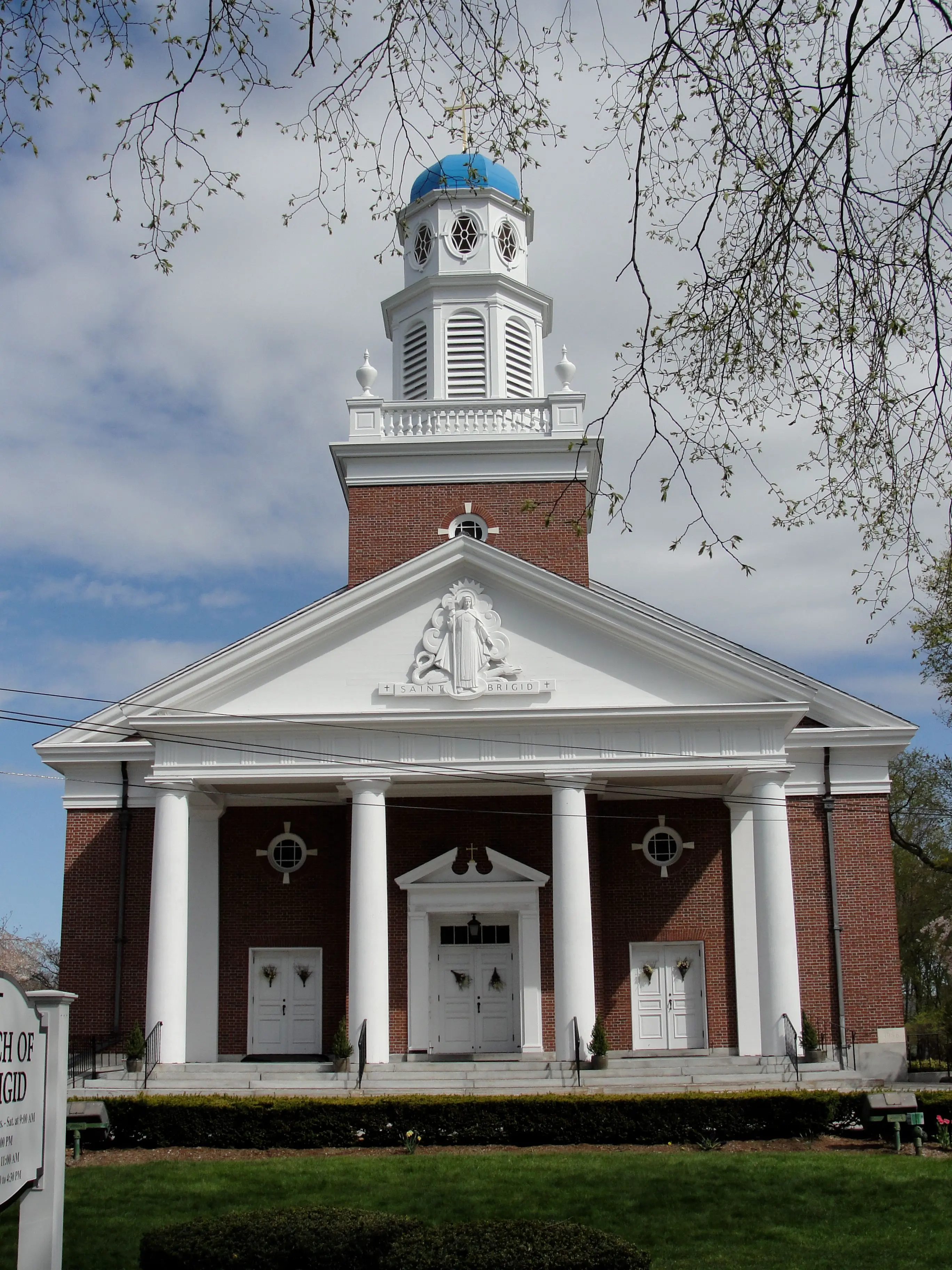
Since 2011, St. Brigid's Parish in Lexington has cut its carbon footprint and energy costs sharply, lowering heating expenses by more than 50%, reducing emissions by 53 metric tons a year, and saving $32,000 annually through insulation, efficient lighting, and cleaner heating systems.
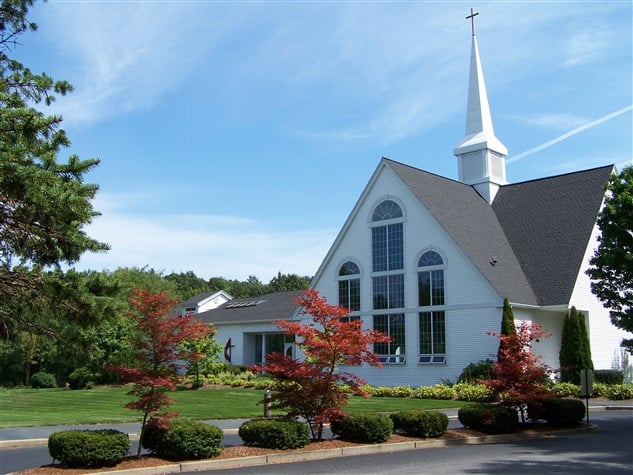
St. Matthew's United Methodist Church improved insulation, sealed leaks, promoted energy-saving behaviors, and added solar lighting, cutting heating costs by 19%, electricity use by 8%, and overall carbon emissions by 22%.

