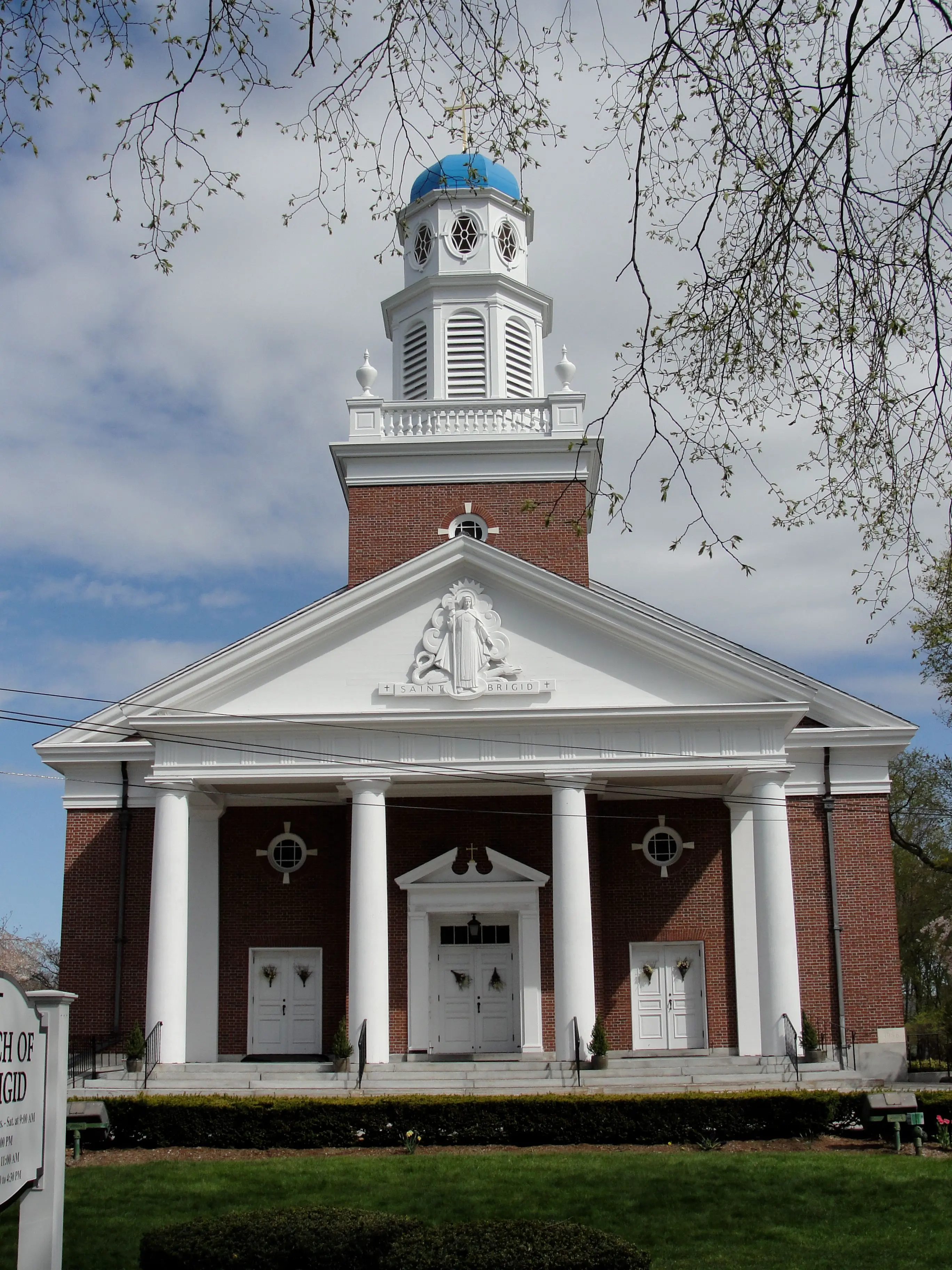


St. Brigid's of Lexington, MA holds an important place in the history of Catholicism in Massachusetts, having become an independent parish in 1886. The current church building was constructed in the late 1950s and has since been home to an active and dedicated parish. The mission statement of the community of St. Brigid's and its sister Lexington parish, Sacred Heart, includes a pledge to respect creation. With support from staff and the lay-led Faith and Environment Group, St. Brigid's and Sacred Heart have a history of putting their faith into action.
In 2011, MassIPL conducted an Environmental Stewardship Assessment (ESA) of St. Brigid's Church and Parish Center. The parish staff and volunteers collected historical energy usage data in advance of a site visit. MassIPL identified several opportunities for St. Brigid's to decrease their carbon footprint and substantially reduce their annual energy costs. The MassIPL report confirmed the benefit of existing plans to convert from an outdated oil-fired heating system to a natural gas-fired system. Also high on the list of energy-saving recommendations were installing roof insulation, weather stripping, and replacing existing lights with energy-efficient LED bulbs.
Parish staff obtained cost estimates and developed strategic plans to implement the most cost-effective and energy-efficient opportunities. They converted expensive and aging oil-fueled heating systems to efficient, gas-powered systems; installed energy-efficient lighting; and insulated the church roof with icynene spray foam insulation, the current state-of-the-art material used in new commercial and some residential construction.
St. Brigid's conducted its first before-and-after comparison in 2013 after one full year of operation. The results are impressive!
Money saved:
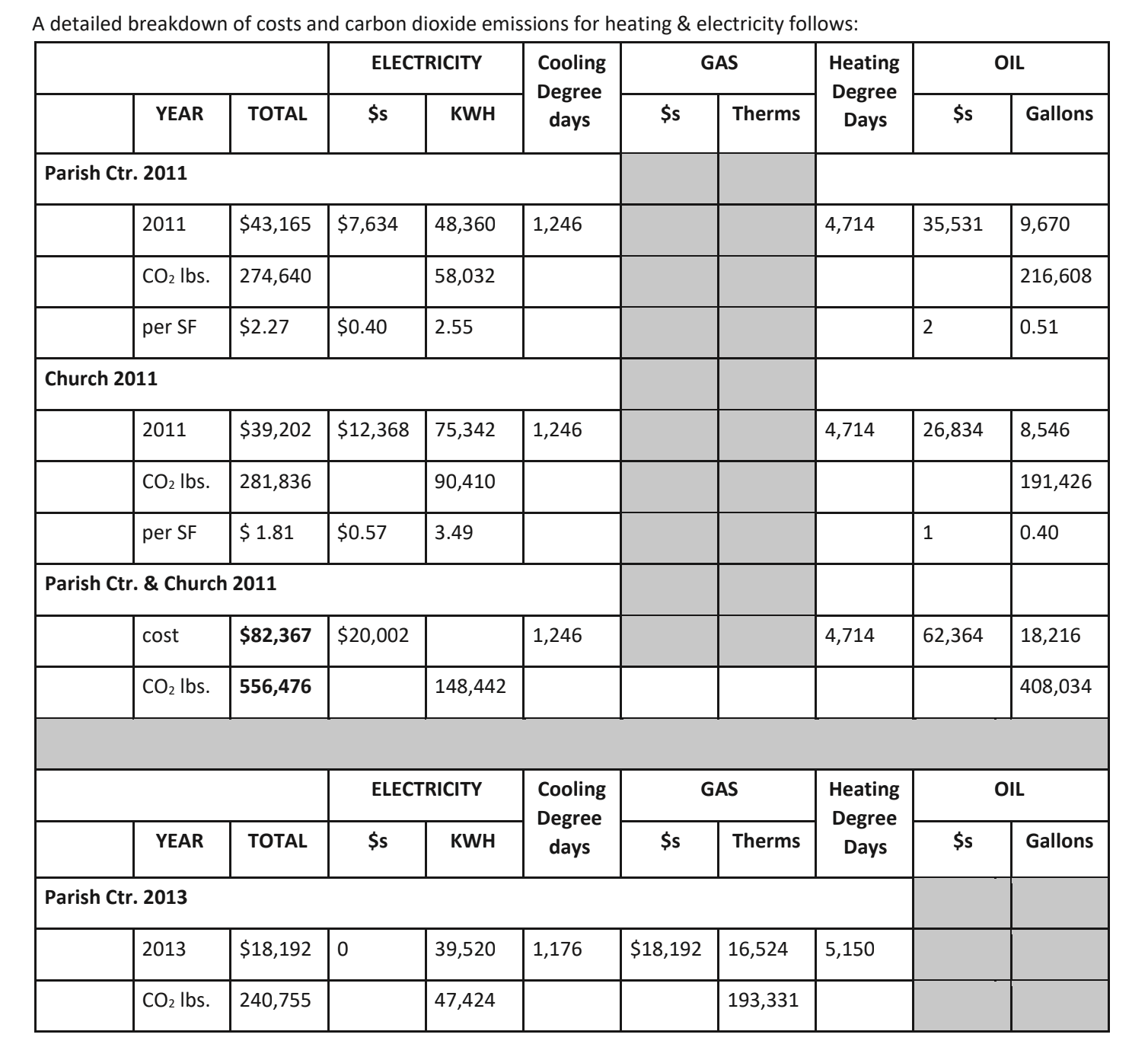
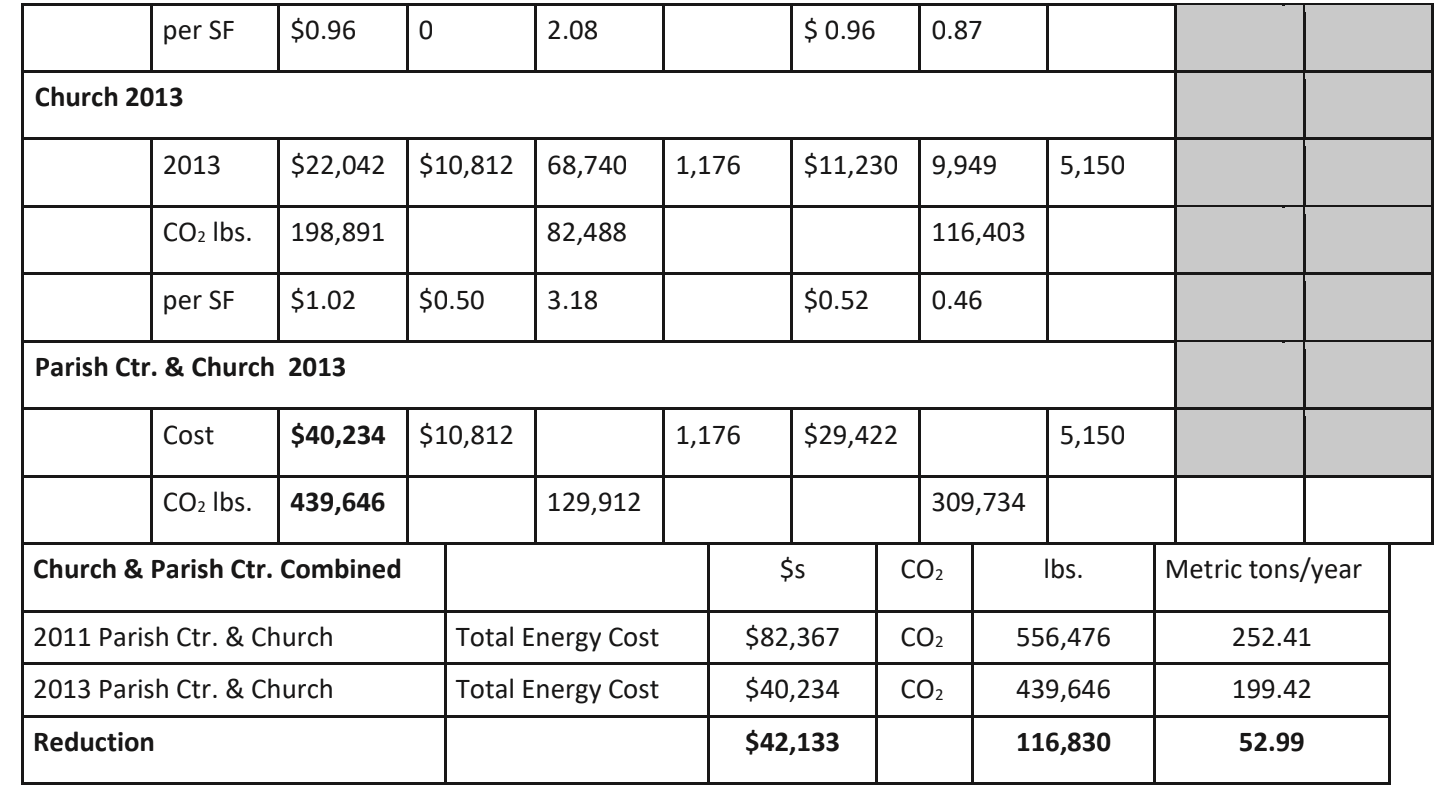
In sum, St. Brigid's lowered its annual heating costs by $32,942 by insulating the church with icynene and converting to gas heating systems in both the Church and Parish Center. Heating costs in 2013 dropped 53%—from a total of $62,364 in 2011 to $29,422 in 2013. That huge decrease occurred even though there were 21% more heating degree days in 2013, which means that it was a much colder winter!
Carbon emissions reduced:
St. Brigid's Church and Parish Center reduced their annual emissions by a total of 52.99 metric tons of carbon dioxide. These results are great news for St. Brigid's, both in terms of a substantial reduction in operating costs and a giant step forward in caring for creation.
A detailed breakdown of costs and carbon dioxide emissions for heating and electricity follows:
St. Brigid's did not stop there! Their active and diverse adult education programming, shared with their sister parish, includes activities planned by the Faith and Environment Group. This committee “provides a faith-based response to the moral challenge of climate change by leading prayer services, and offering films, speakers, and bulletin articles on caring for creation. In addition, it works with the staff and parishioners to reduce energy use in the parishes and at home.” Continuing education is a critical part of MassIPL's mission. Energy-saving strategies must go hand-in-hand with lifestyle changes and an increased understanding of the connection between faith and the responsibility to care for creation.
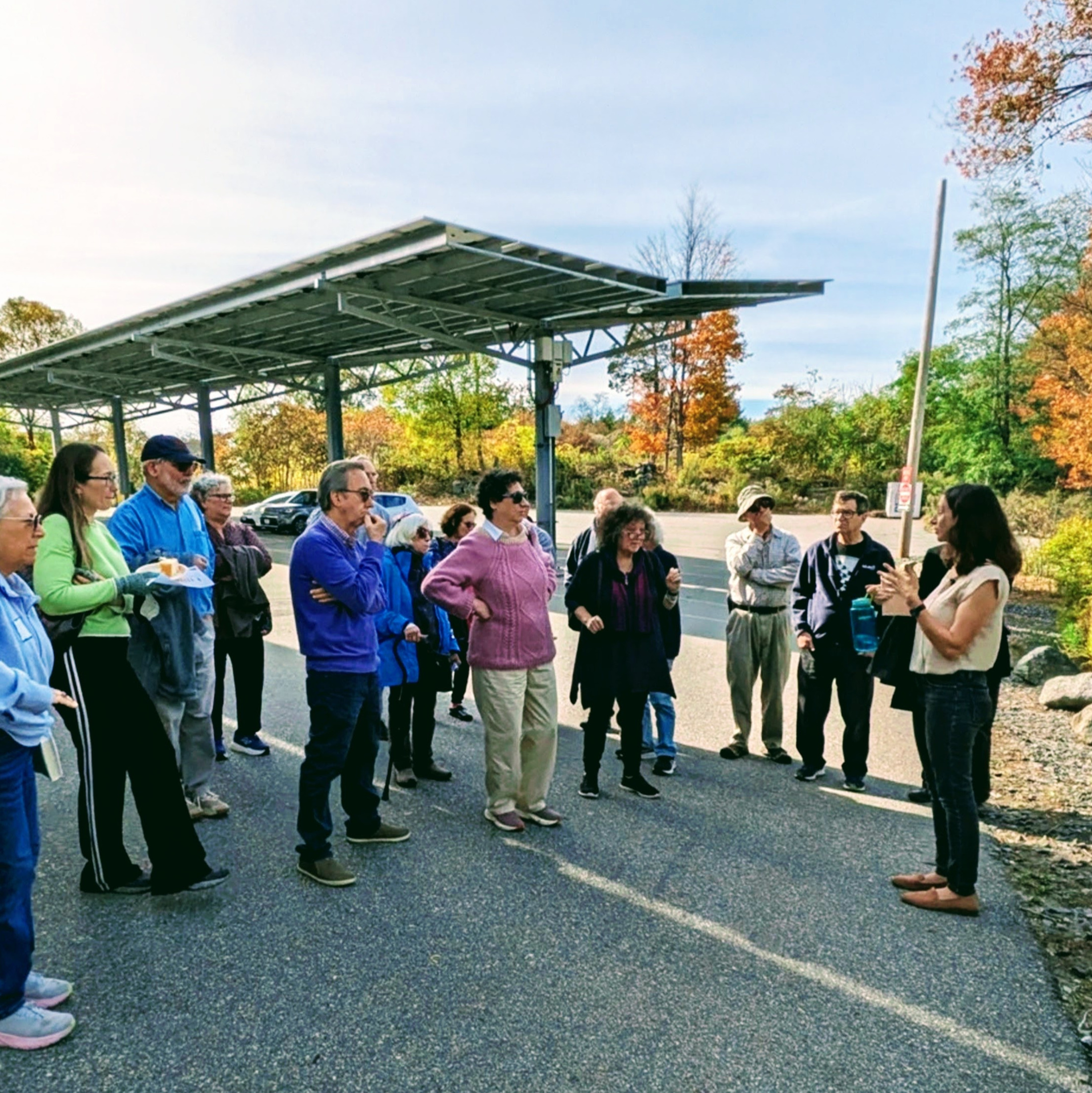
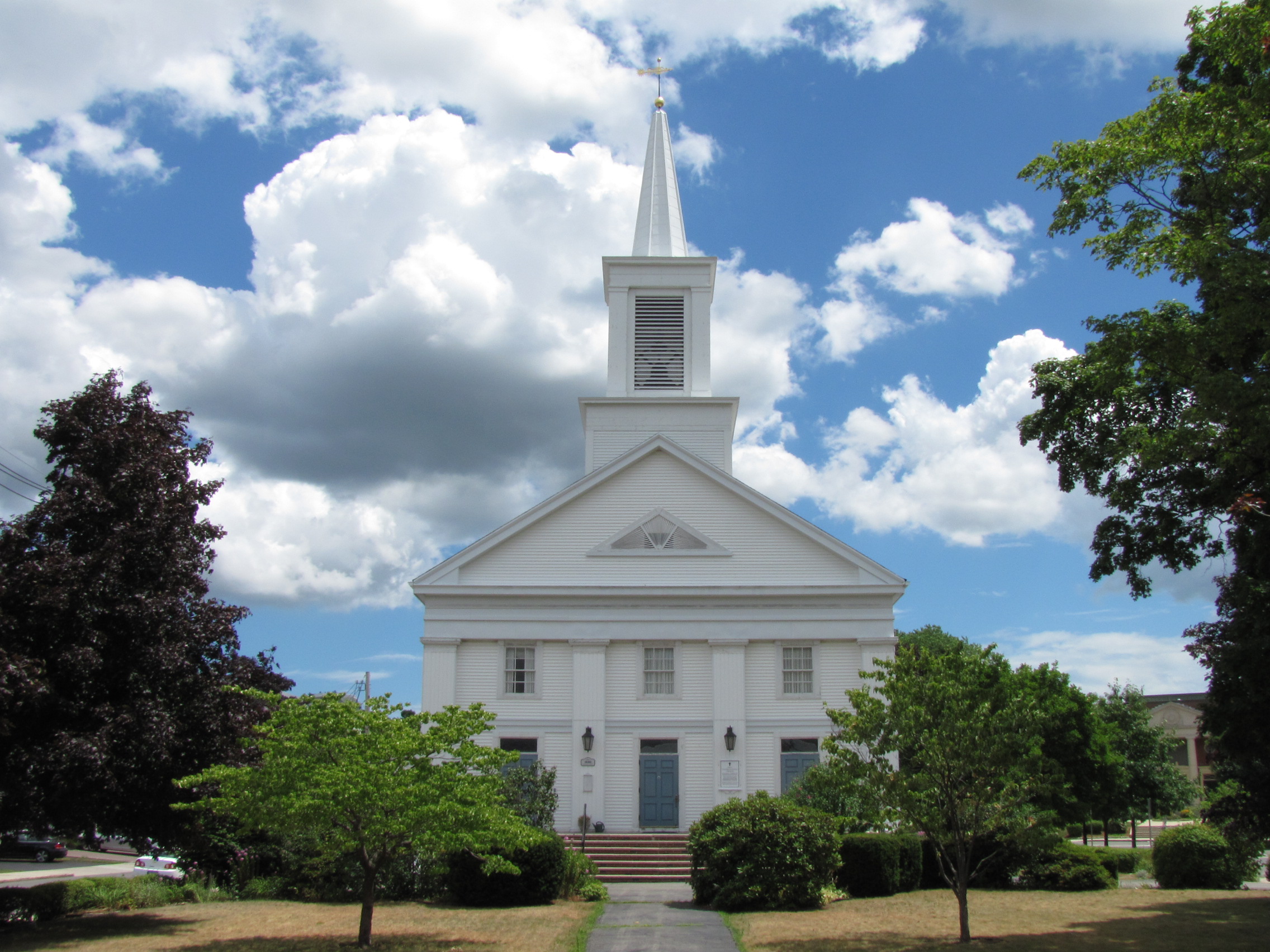
A historic 1840 church that became a catalyst for its community, cutting carbon emissions by more than 62 metric tons and energy costs by over $25,000 a year through boiler conversion, LED lighting, new windows, heat pumps, and rooftop solar.
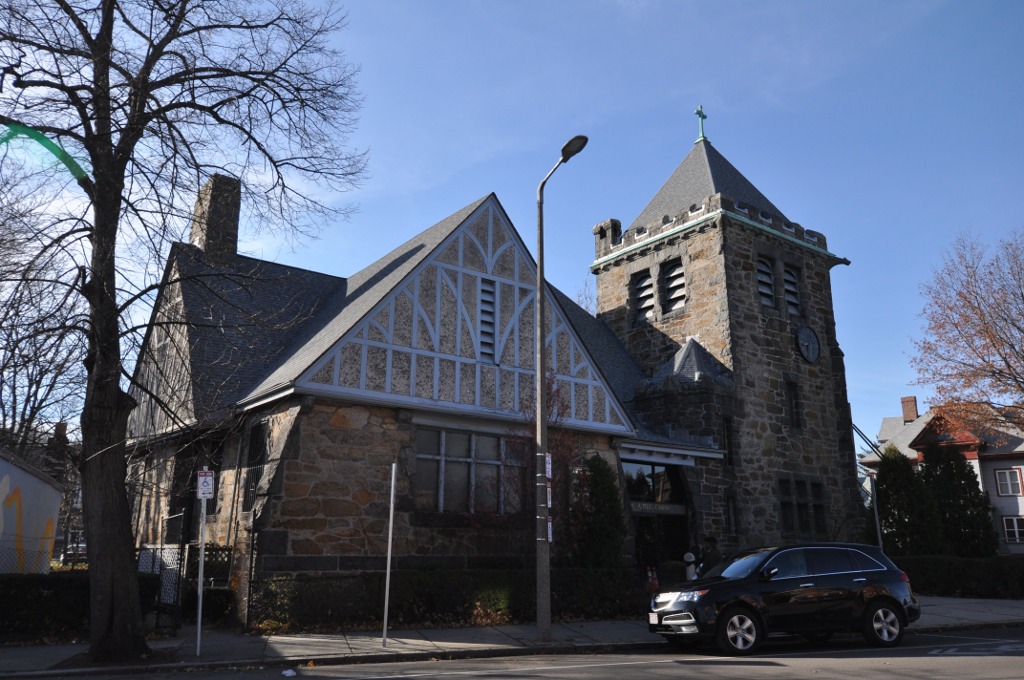
Charles Street AME Church began its environmental journey by improving energy efficiency in its historic building, starting with practical upgrades like insulation, storm windows, efficient lighting, and hot water adjustments to reduce both costs and environmental impact.
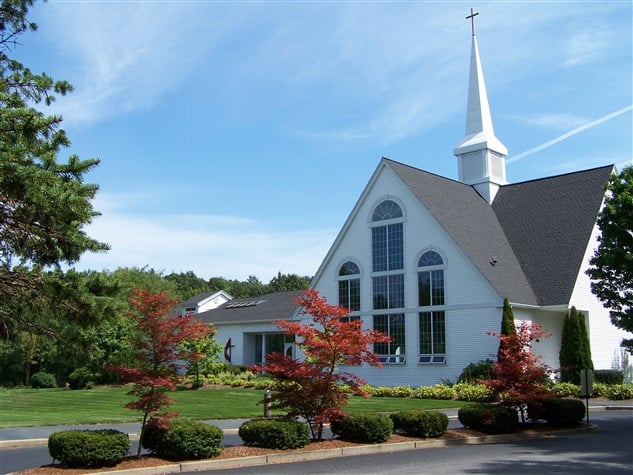
St. Matthew's United Methodist Church improved insulation, sealed leaks, promoted energy-saving behaviors, and added solar lighting, cutting heating costs by 19%, electricity use by 8%, and overall carbon emissions by 22%.

