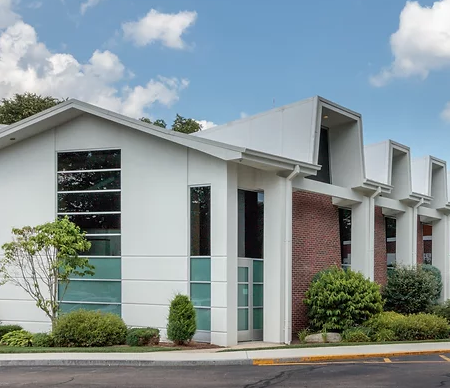


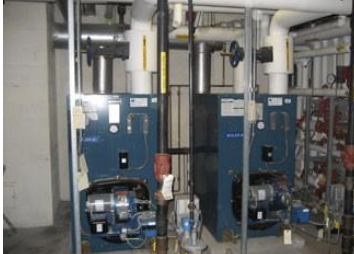
Temple Beth Shalom in Needham has made efforts in recent years to reduce energy bills and carbon footprint. In 2003, Beth Shalom switched from a low-efficiency oil furnace to two gas-fired hydronic boilers that have 88% efficiency. (See photo at left.) At $1.60 per gallon of oil compared to $1.30 per therm, the new Burnham systems save the Temple $3,000–$4,000 every year.
After upgrading the heating system, the renovation committee decided to go for “low-hanging fruit” and switch all the building's incandescent light bulbs for Compact Fluorescent Lights (CFLs) and regular fluorescents. This change has led to a decrease of roughly 2,500 kWh per month and 36,000 lbs of CO2 per year. This translates to $6,600 saved annually. The CO2 reduction is equal to planting 2,100 trees (about 3 acres).
In 2006, the renovation committee had insulation installed in the walls and ceiling to provide a thermal barrier. After the insulation had been installed, Beth Shalom replaced its old windows with new thermopane windows that would leak less air. The insulation and storm windows allow Beth Shalom to remain at a comfortable temperature at a reduced cost and lower carbon footprint.
New thermostats were added to each classroom, allowing each classroom to become its own zone. The classrooms run off stub-ins from a common loop. The thermostats control only the stub-in, so each classroom can now heat independently without requiring new piping. Before the change, all the classrooms were part of a single zone. Under the old system, many rooms would unnecessarily receive heating if a single room was being used. The renovation committee replaced all the manual thermostats with programmable thermostats. The new thermostats save the congregation money by only heating rooms that are in use and automatically turning the heat on and off. The congregation also added a dumpster in the parking lot that is for recyclable materials only. The congregation is able to make money from selling the recyclables to manufacturers.
In addition to having an environmentally friendly building, Temple Beth Shalom has members who are environmentally active. There is a committee dedicated to environmental stewardship. Committee Shomrei Adamah (Guardians of the Earth) collaborates with environmental organizations to bring programs to the Temple that promote environmental education and advocate environmental action. In recent years, the Temple has conducted a carbon reduction campaign for its members through its website.
The Temple has a social action committee that collects and sends medicine bottles to Africa for re-use. The committee also works with the Temple's youth to encourage environmental activism. Children from the temple have been selling reusable grocery bags to increase awareness, raise money, and promote sustainable living.
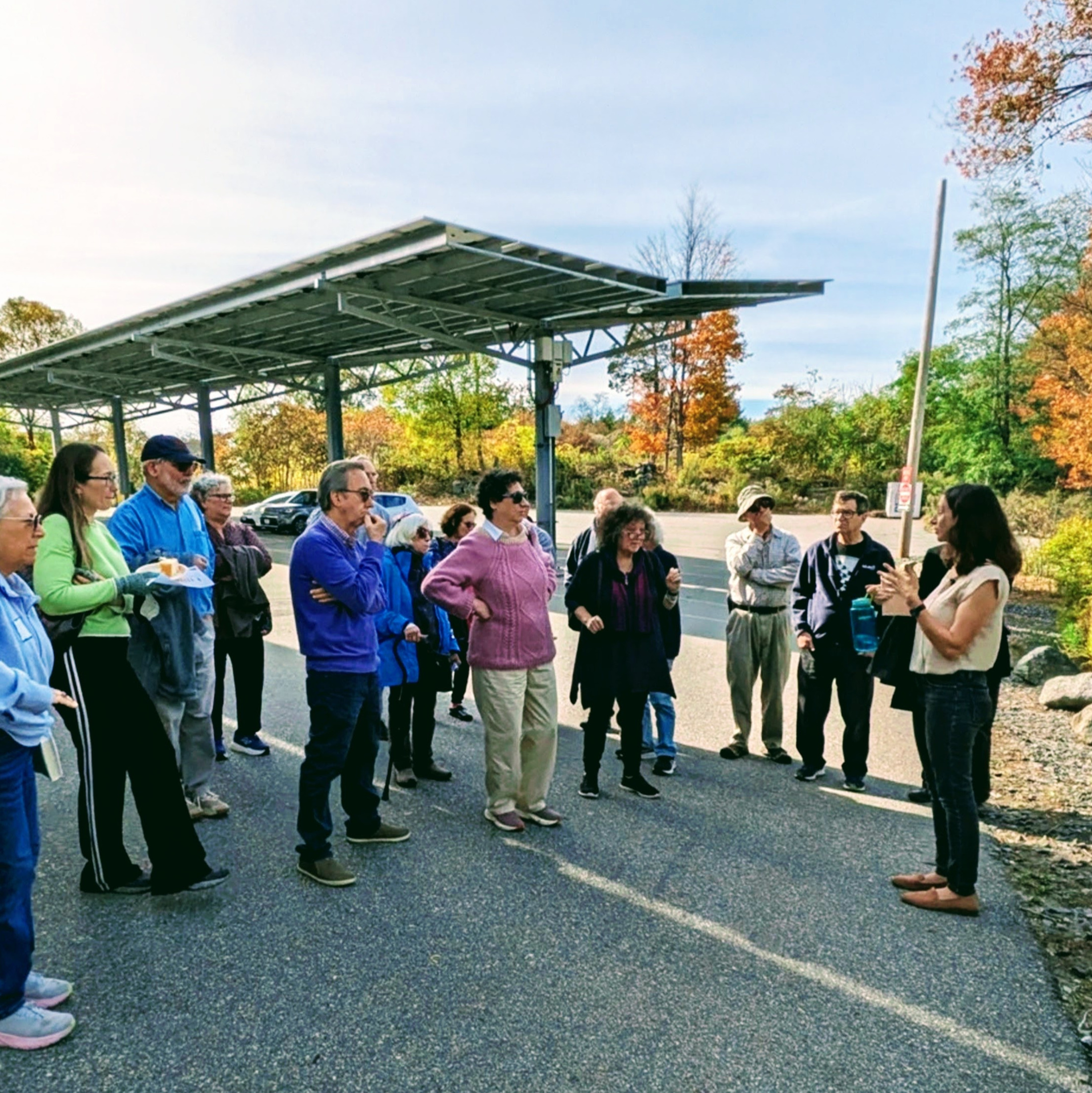
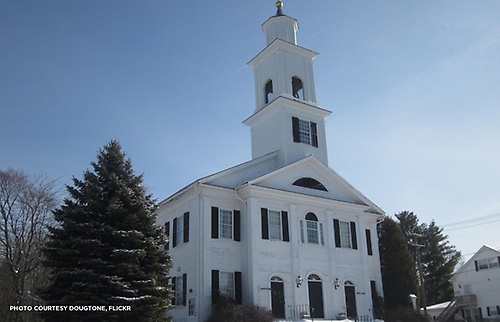
Since 2006, the church has reached its goal of Net Zero Energy Use, cutting total energy use by 70%, eliminating its carbon footprint, and saving $17,000 a year through conservation, efficiency upgrades, and solar power.
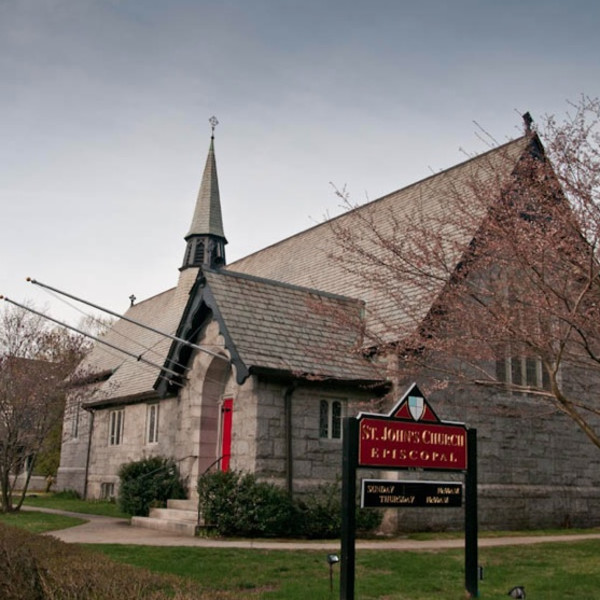
St. John's Episcopal Church in Newtonville turned a heating crisis into climate leadership. Through upgrades and careful planning, St. John's cut carbon emissions 58% since 2012 while preserving its historic building and improving year-round comfort.
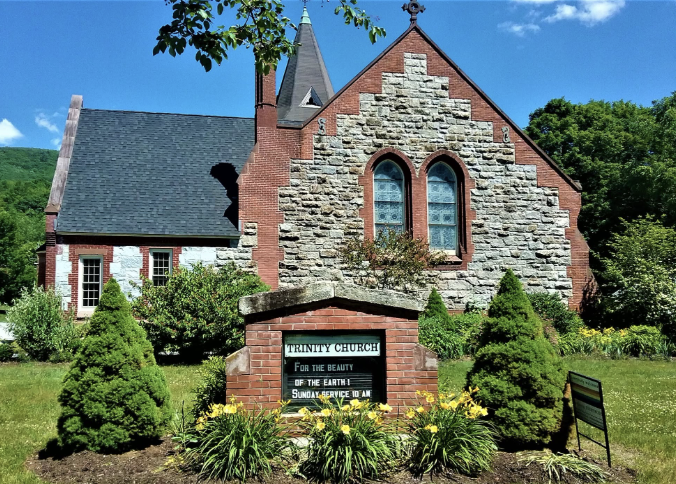
In flood-prone Shelburne Falls, Trinity Church is turning its building into a climate resilience hub, adding solar, weatherization, heat pumps, EV chargers, and a commercial generator so it can shelter, power, and feed neighbors when disaster strikes.

