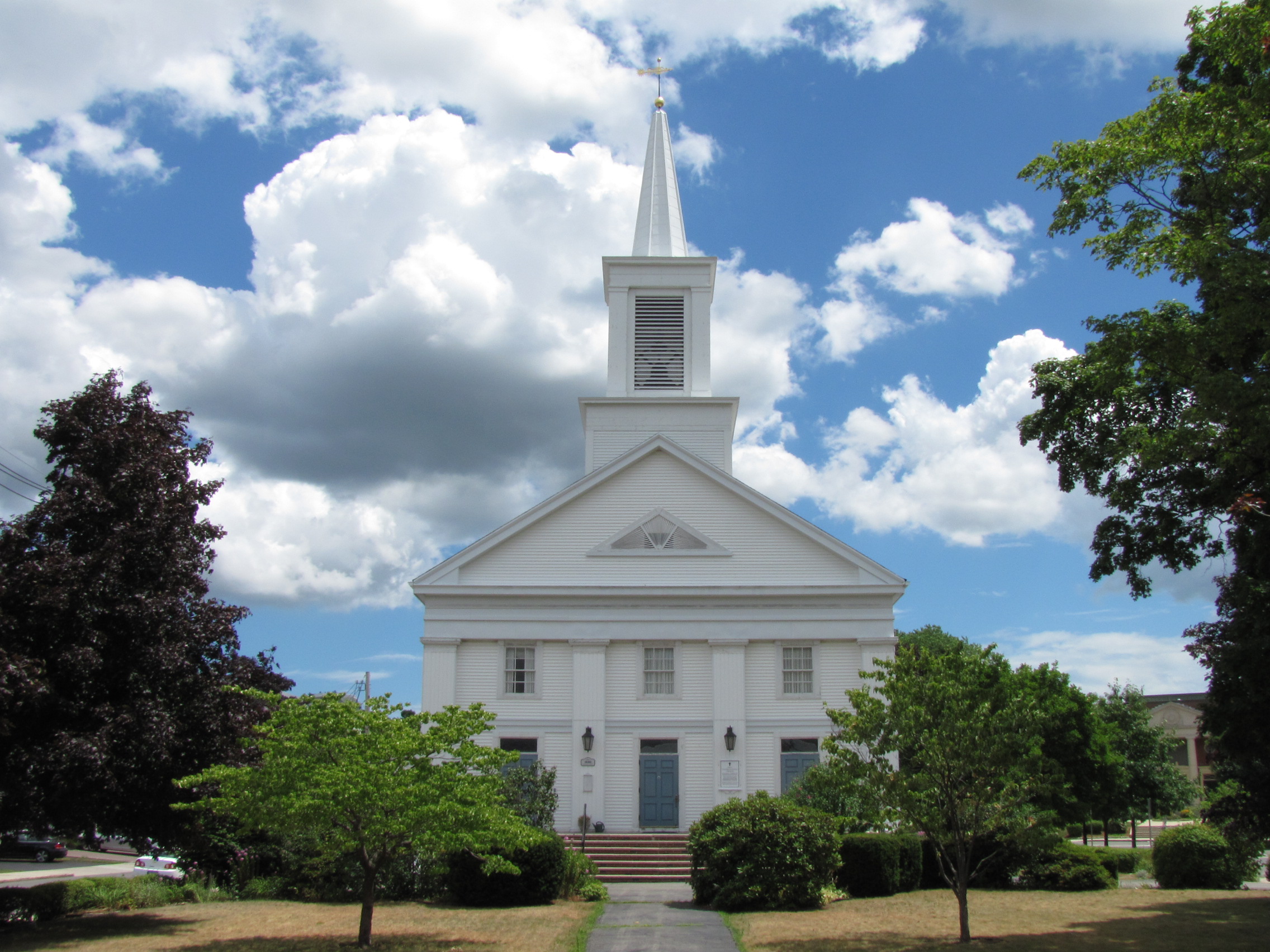


First Congregational Church (FCC) Stoneham was founded in 1729 as the first church in the Town of Stoneham. The original building was constructed in 1840 and is listed on the National Register of Historic Places. A two-level brick addition — part of which houses the Purpose School — was built in the early 1940s. Together the building comprises some 12,000 square feet.
The Trustees were prompted to take a close look at their 175-year-old church and its 1940s-era addition by soaring electricity and water bills, drafty windows, and a sanctuary and meeting rooms that were difficult to keep comfortable, particularly in winter. The old oil-burning boiler was clearly in need of replacing, and the incandescent lighting throughout the church was costly — both in electricity and in the maintenance of constantly replacing bulbs. Beyond the dollars, the church wanted to maintain its role as a leader in the community and to model good behavior in response to the climate change crisis.
As the graph below shows, calculated CO2 emissions and energy costs fell dramatically between 2012 — the first full year before improvements began — and 2016, the most recent year for which complete data is available.
And those reductions come before the new 35 kW solar PV system is taken into account. The carbon dioxide reductions are equivalent to the annual emissions of 13.2 passenger cars, or the electricity used by 6.6 homes in a year.
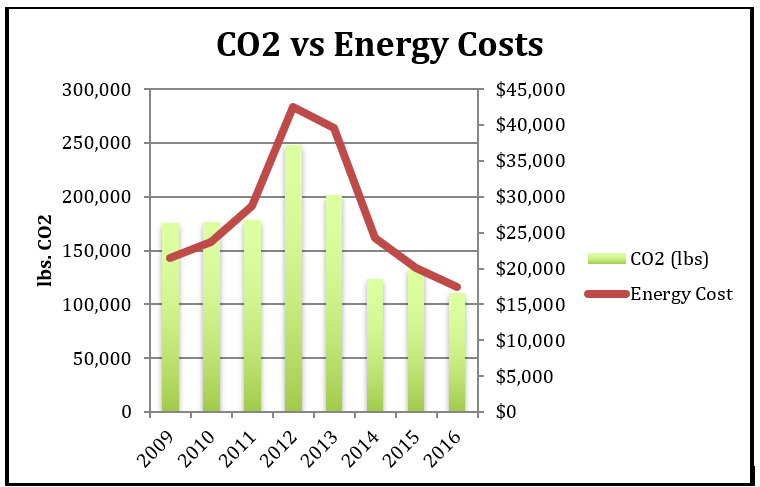
Energy use and costs vary from year to year with heating and cooling degree-days and with the price of energy. From 2009 to 2013, the church averaged $31,195 in annual energy costs and 89.1 metric tons (196,419 lbs.) of CO2 per year. From 2014 to 2016, those figures fell to $20,587 and 55.5 metric tons (122,309 lbs.) — an average reduction of $10,608 in costs and 33.6 metric tons (74,110 lbs.) of CO2 each year.
As FCC pastor Rev. Meredith Allen put it: “We believe we are created in the image of God, and we honor God and our neighbor when we choose to protect the environment. This is our mandate as inheritors of the Judeo-Christian tradition. By going solar and confronting the deadly threat of climate change, we hope to be a catalyst for our entire community.”
FCC Stoneham invested in the following improvements over five years:
A Weil-McLain Model 88, Series 2 steam boiler — capable of burning either oil or natural gas — was installed in October, replacing a 40-year-old oil-burning boiler. The new boiler was required to run on oil only until the chimney could be lined.
Through the Mass Save program, FCC Stoneham worked with AECOM on a full LED lighting retrofit, completed in 2015. Incentives covered seventy percent of the cost, so the church paid only $11,400 of the $38,000 total. AECOM estimated annual energy savings of $4,800 and a simple payback of 2.3 years. The chimney was lined in April 2014 and the 2013 boiler was switched to natural gas.
The church began an ongoing project to replace its windows — most or all of them single-pane casements — with vinyl-clad, double-pane energy-efficient units, starting with the five classrooms in the school building and the south-facing windows of the office wing. A new, efficient 75-gallon gas-fired water heater was installed in July, replacing a very old concrete-lined electric unit. In October, a Mitsubishi MSZ-FE18NA mini-split ductless heat pump was installed in the chapel so it could be removed from the main heating system and heated or cooled only when needed. New thermostats went into the sanctuary, chapel, Purpose School, and Fellowship Hall, and insulation was added above the church office and one classroom. In December, the boiler was switched back to oil to take advantage of record-low oil prices.
The window upgrades continued in the choir room, food pantry, and lower-level bathrooms. In April, the boiler was switched back to natural gas, and the Trustees committed to using natural gas exclusively going forward. Toward the end of the year, SunBug Solar installed a 35 kW roof-mounted solar PV system. Rather than purchase the panels outright, FCC Stoneham signed a twenty-year power-purchase agreement (PPA) with InSource Power to buy the solar energy at a significant discount. The system became operational in December.
In conjunction with the 35 kW array, beginning in May FCC Stoneham partnered with SunBug Solar to offer additional incentives for church members to install solar on their own homes. SunBug offered members a discount and matched that amount with an equivalent donation to the church, available for energy or building improvements or any other need.
For more information, contact Ben Jacques (Board of Trustees) or Lynn Haddad (Church Treasurer).
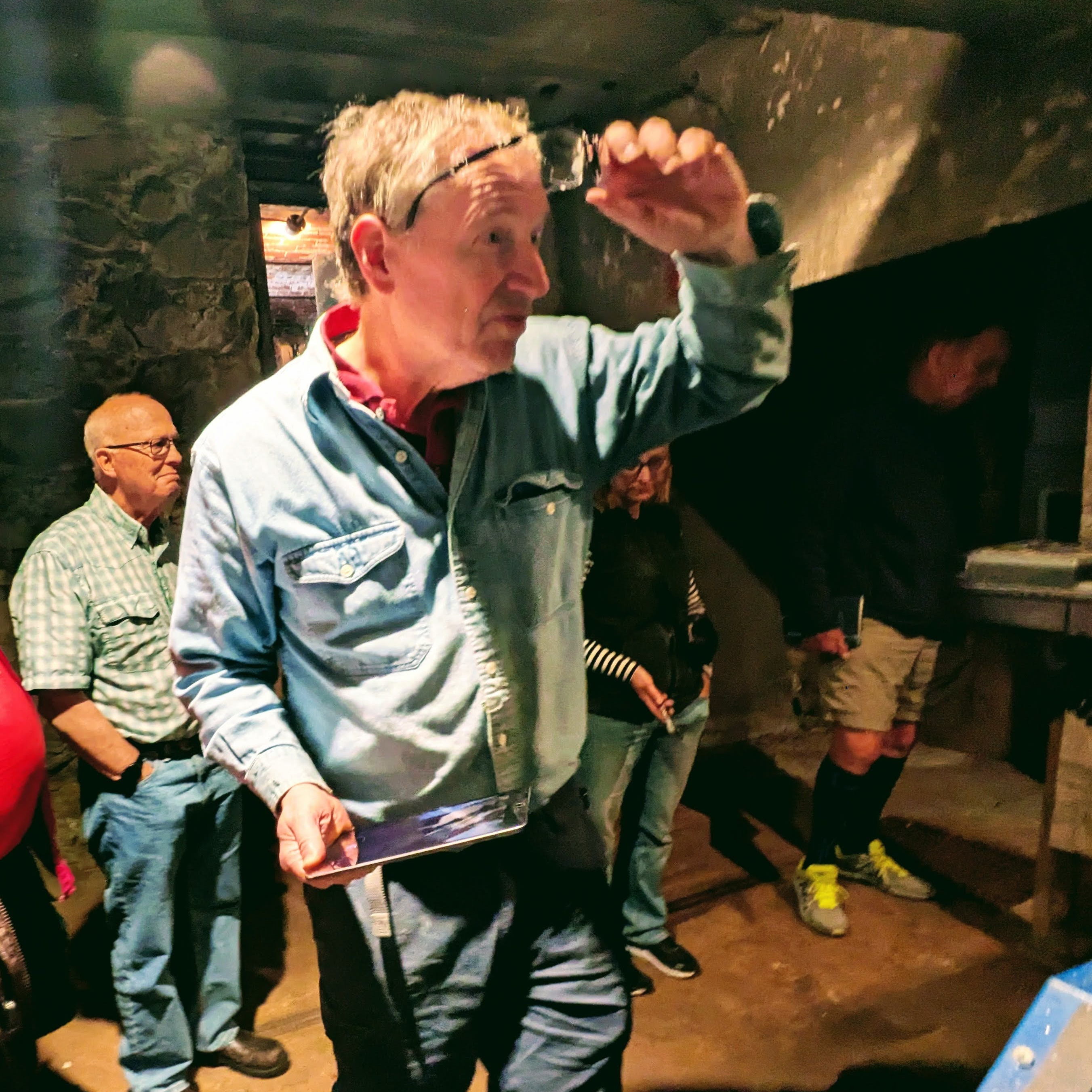
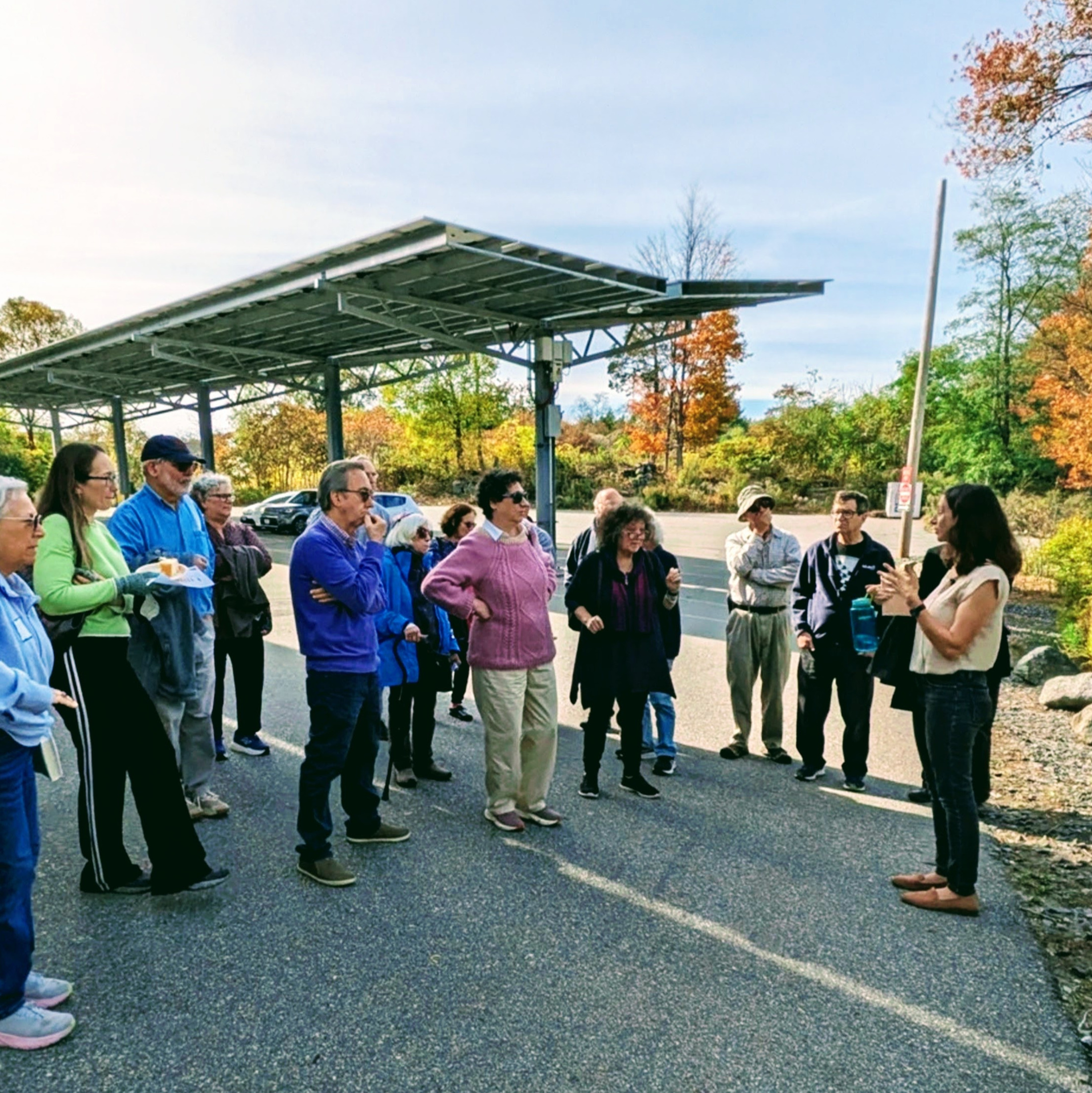
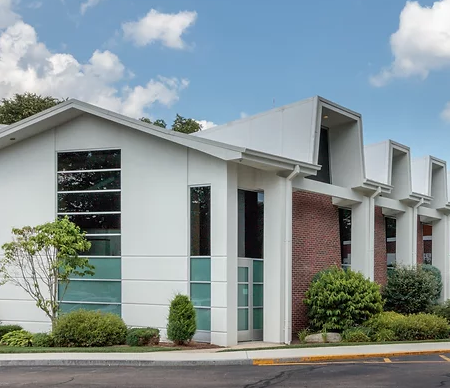
Temple Beth Shalom in Needham has cut its energy use and carbon footprint through major building upgrades, efficient heating and lighting, waste reduction, and active environmental education and engagement within its community.
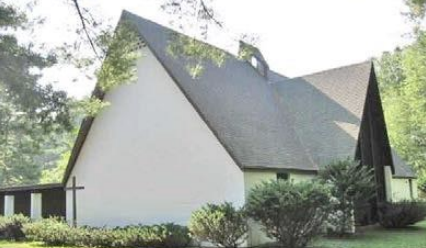
Trinity modernized its aging heating system with high-efficiency boilers, improved controls, and better zoning, resulting in much lower energy costs, a 53% reduction in CO₂ emissions, and improved comfort for building users.
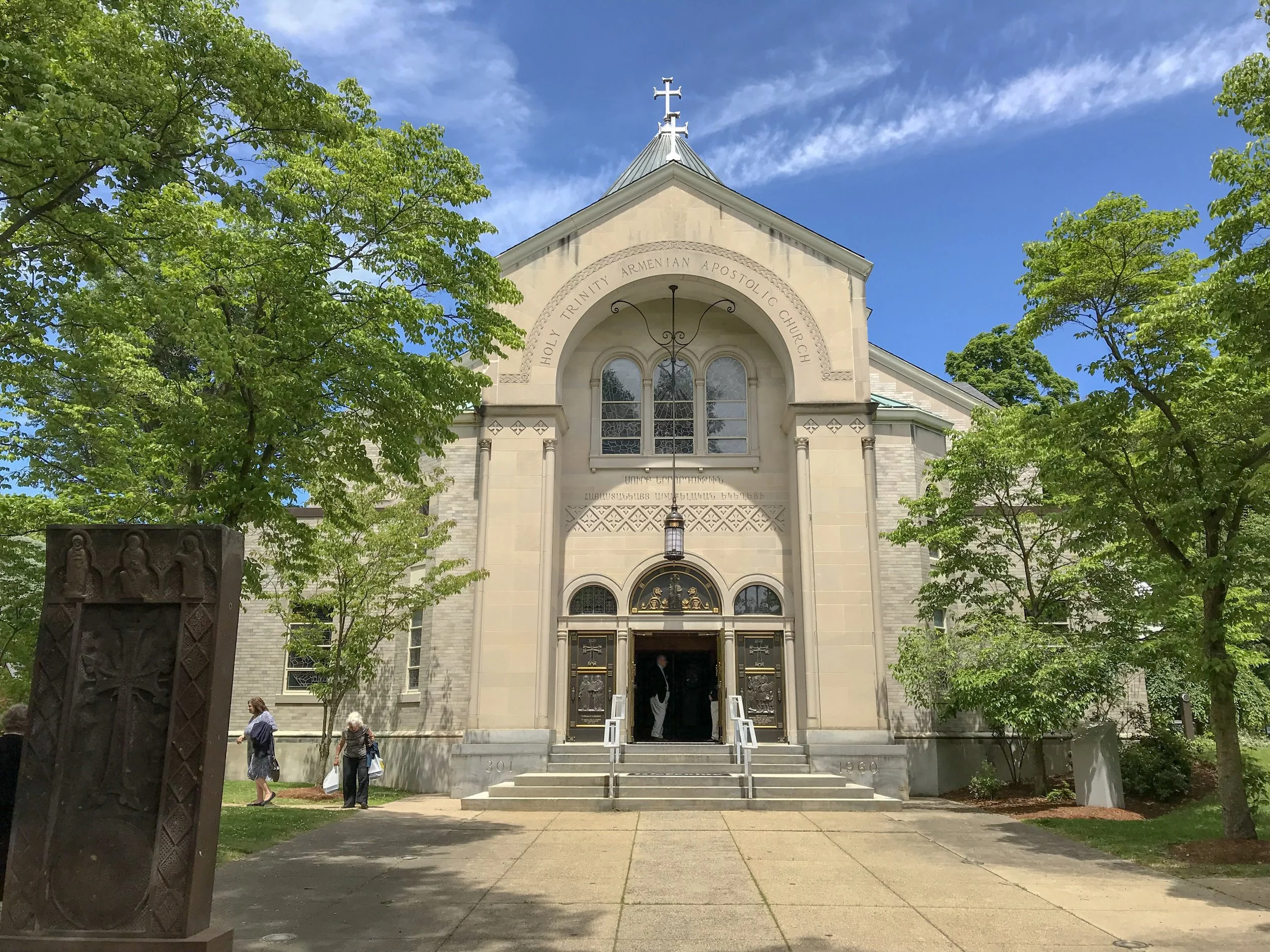
Holy Trinity replaced its failing 1950s radiant heating system with modern high-efficiency boilers, smart zoning, and new in-floor radiant piping, cutting heating costs by 40%, reducing water use, and greatly improving comfort and reliability.

