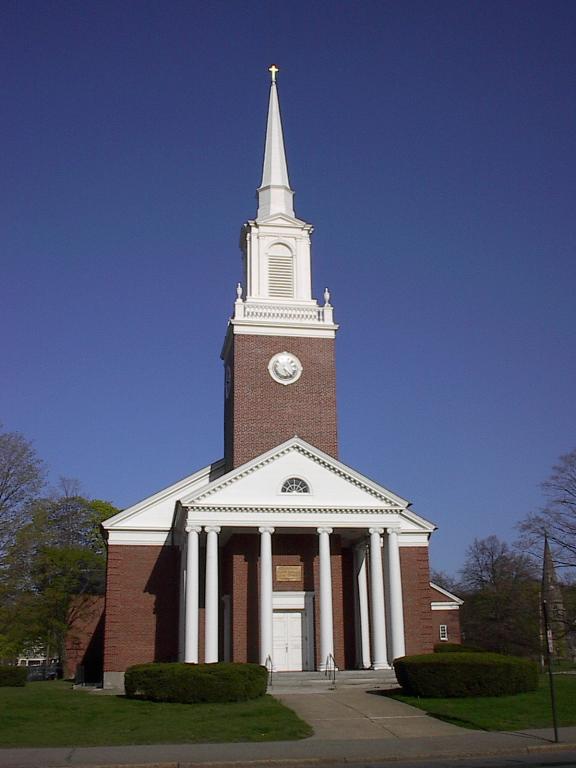


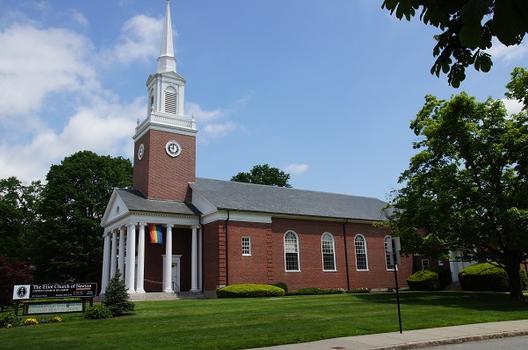
The Eliot Church in Newton, Massachusetts, a United Church of Christ, was established in 1845 by 37 neighbors. Their current facility now includes a primary sanctuary, a smaller chapel used for worship during the summer months, pastors' offices, an administrative office, a parlor, a large fellowship hall, and space rented to a day care center and other non-profits. In 2003, Eliot Church became a charter member of Massachusetts Interfaith Power & Light (MassIPL) and embarked on their “Caring for Creation” initiative. After a comprehensive environmental assessment and energy audit which included technical and behavioral recommendations, Eliot Church began to implement energy efficiency projects on a gradual basis as the money was available. In 2014, Eliot applied for recognition from the EPA as an ENERGY STAR® certified building. Based on a thorough site assessment, the Eliot Church facility was awarded an ENERGY STAR with a rating of 91/100—highlighting the church's excellent energy efficiency.
Immediately after the environmental assessment at Eliot Church was completed, NStar (now Eversource), the local electricity provider, performed a lighting audit which resulted in replacing all the incandescent light bulbs with more energy efficient options. Exterior lighting and interior CFL lighting in the sanctuary and chapel have since been replaced with long-lasting LEDs, and signs reminding congregants to conserve energy were placed on the elevator and on all light switches.
In addition to these lighting upgrades, Eliot took the following actions:
Comparing heating costs in calendar year 2008 ($17,395) to 2011 ($9,106), Eliot Church realized a 43% annual savings in their heating bill from an improved heating system. The switch from oil to high efficiency natural gas not only saved them money, but also resulted in a 45% reduction in carbon dioxide emissions.
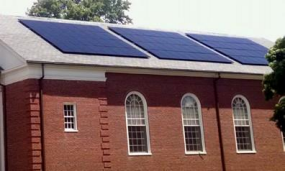
In July 2016, a photovoltaic solar system using SunPower panels was installed on the roof by BlueSel Solar, a locally owned company with offices in Woburn and Sandwich. The system will have an estimated annual output of 31,952 kWh and is expected to cover 98% of the church's electrical needs. The project cost Eliot $130,000. Even though the existence of a slate roof increased installation costs, the project is expected to have a payback time of seven to eight years.
Eliot has reduced its carbon dioxide emissions by 45 metric tons when data from 2015 is compared with 2003, the year Eliot began the series of upgrades. Heating accounts for the large majority of energy used by houses of worship in New England. 2015, the year of “Snowmageddon” in New England, was a very cold year. There were 18% more heating degree days (the number of days when heat was required) in 2015 than in 2003. Despite that 18% increase, the carbon dioxide emissions in 2015 were 41% lower than in 2003.
Eliot's commitment to creation care extends beyond the improvements made to its building. Eliot long ago recognized that a robust response to climate change requires collaboration with other groups to effect change in public policies. In 2006, Eliot invited members of the community to a screening of An Inconvenient Truth provided by Interfaith Power & Light. Eliot joined the Interfaith Walk for Climate Rescue that began in Northampton and ended in Boston. In 2016, Eliot members and clergy actively advocated for energy legislation requiring utilities to provide more offshore wind and other forms of renewable energy, and for a law requiring that the price of carbon reflect its social and public health costs.
Additionally, every year Eliot participates in volunteer cleanups along the Charles River and at other green spaces during Earth Week. In 2007, Eliot members joined students from Andover Newton Theological School and members of other churches to help plant 70 new trees along Newton streets.
The church found that tracking their energy usage was critical to assessing and managing their energy costs. They have continuously tracked energy savings over the period of their upgrades. Since they were tracking fuel use and heating system performance, they could see that the oil system was losing efficiency even while fully operational, and so the church secured three bids to convert the system from oil to gas well in advance of any system failure.
“In order to achieve energy efficiency and cost savings in a big old drafty house of worship with different users coming and going all the time, attention to behaviors is key. At our church, all members, tenants, and staff know what we as a congregation are striving for and why we are doing it. We track our building's utility consumption ‘religiously.’ That shows us that improvements are paying off or that there's potentially a problem that needs investigation.”
—Mary Anne Schoonover, Eliot Church Facilities Commission

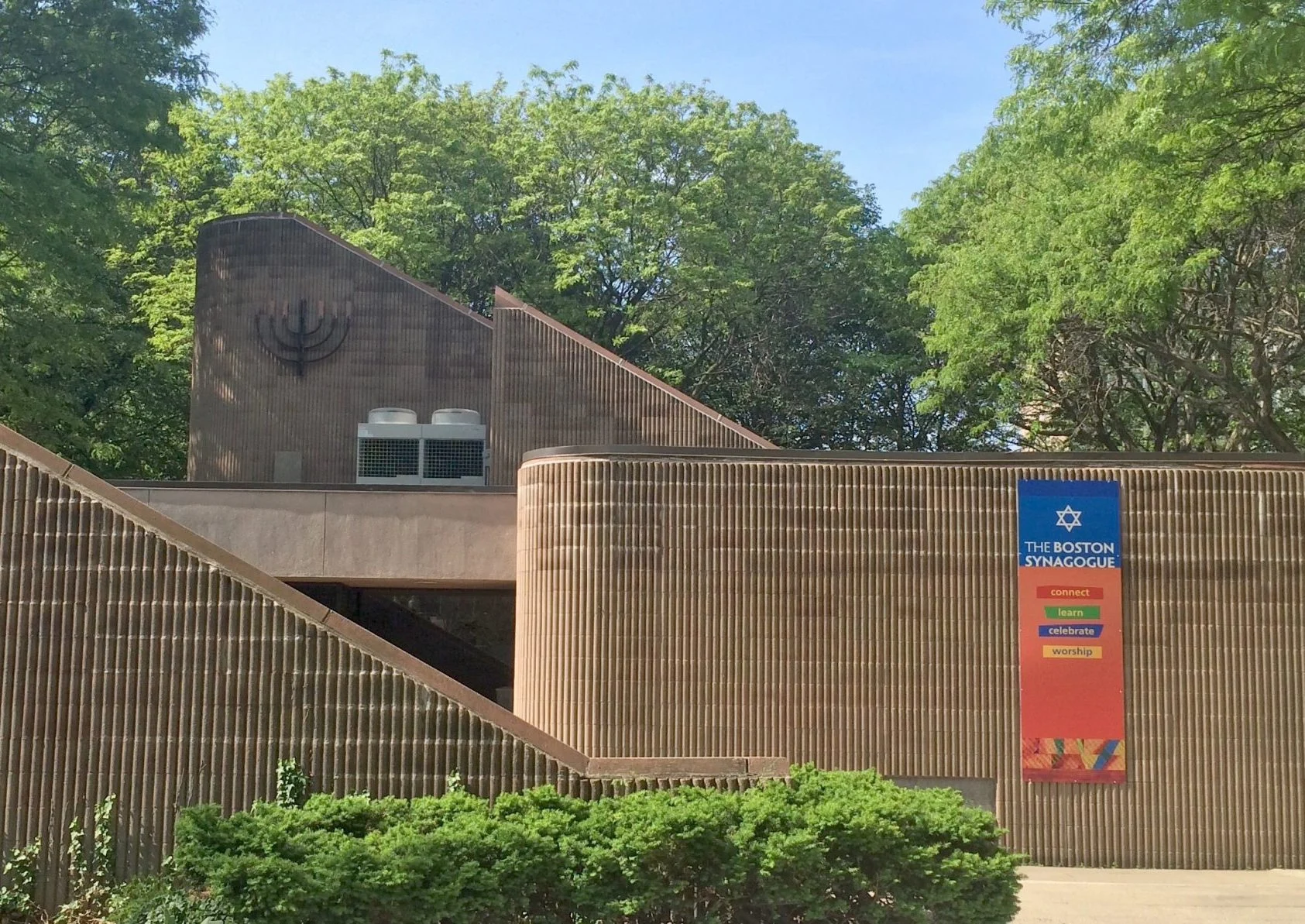
Boston Synagogue dramatically cut its carbon emissions and energy costs by replacing an outdated district steam system with efficient air-source heat pumps and other upgrades, reflecting both practical stewardship and the Jewish principle of tikkun olam.
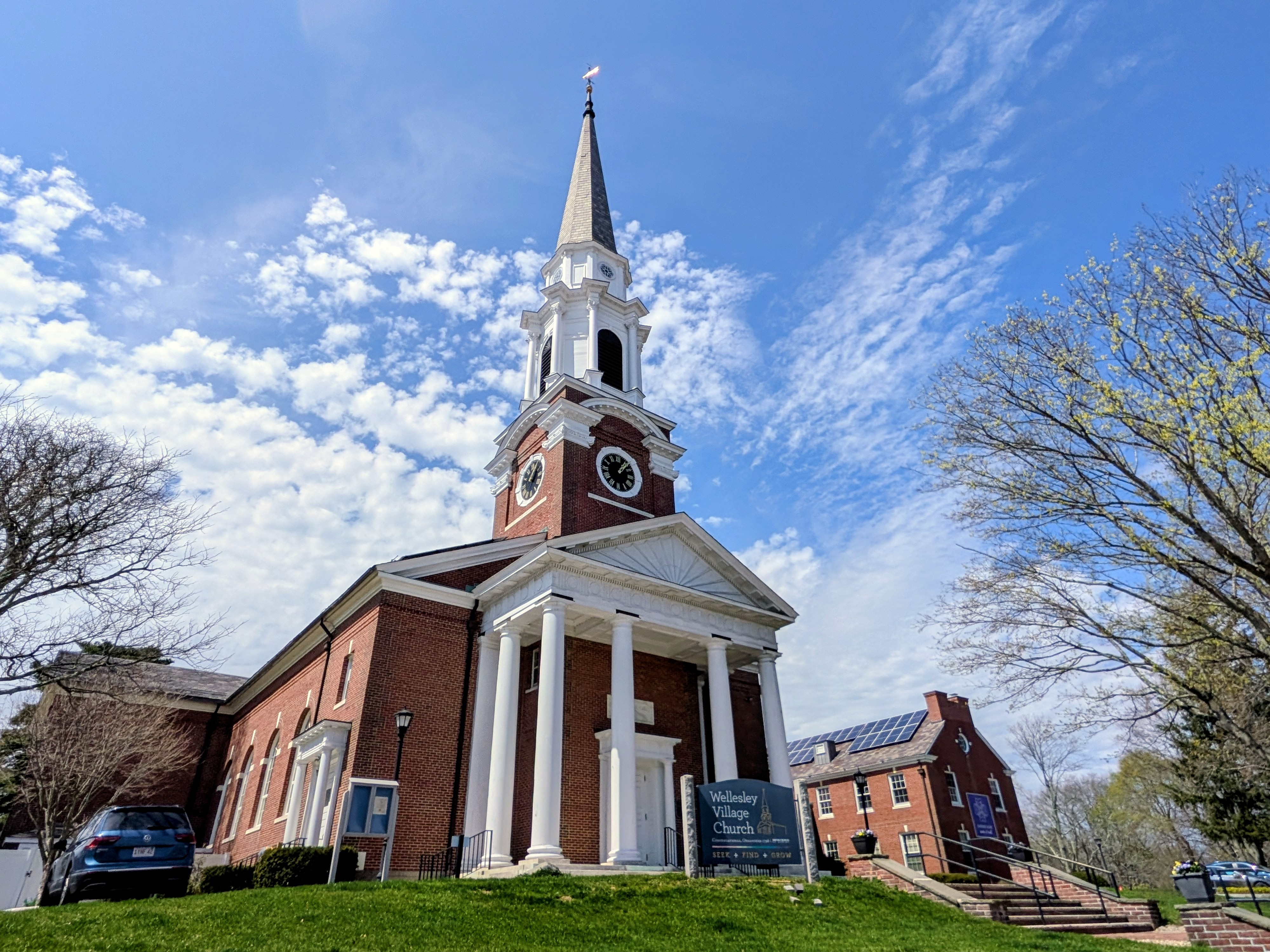
Wellesley Village Church completed a monumental project to meet 100% of its heating and cooling needs with geothermal energy, becoming a leader others across the state and country now look to follow.
When a condemned boiler left First Congregational Church scrambling through one cold winter, the congregation turned the crisis into a decision: a high-efficiency heat pump system that moves the historic 1860 church off fossil fuels and toward a low-carbon future.

