

As people of faith, we believe that we should be stewards of God's creation. As heads of household and governance board members, we wince at energy bills that seem only to increase from year to year, especially when we feel cold drafts. Energy conservation is a great abstract idea, for both theological and practical reasons — but improving the energy efficiency of our buildings (both homes and religious facilities) takes both money and effort, of which we seem never have enough. What to do?
Windows are often sources of these drafts, either because gaps and spaces allow cold air directly in (and heat to escape out) or they have only a single pane of glass which conducts cold. In either case, that is literally the expensive heat we've paid for going out the window! Replacing windows is expensive and in the case of stained glass windows, isn't an option.
A good alternative is interior storm windows to add another layer of physical protection to block drafts and with some types of storms, create an additional barrier to conducting heat. There are three options: (1) Inexpensive flexible plastic film kits available at any hardware store or home center, (2) Build them yourself, or (3) Purchase pre-assembled storm windows.
We do have exterior storm windows. However, to my surprise, closing the exterior storm windows did not greatly improve the interior temperature readings! How could this be? An exterior storm window with moveable upper and lower sashes leaks air, both at the middle and also around the edges. It also has to have "weep holes" to drain away condensation (in winter) and rain (in summer) which otherwise would rot the window sill. The weep holes leak air, reducing the insulating effectiveness of the storm window. They are also problematic for stained glass windows: moisture condenses on the metal frame, causing rust and deterioration of the window, accelerating the timing for major — and very expensive — restoration.
I liked the effectiveness of the plastic film kits, especially because they are inexpensive. Flexible plastic film (boxed kits from 3M, FrostKing, Niagara Conservation) applied on the INSIDE of windows helped a lot, as long as the plastic film was airtight all the way around, especially along the bottom of the window. But, they are a recurring pain to install, get punctured easily and are needless refuse for recycling. Also, my wife didn't like either their appearance or the paint damage done by the double-sided adhesive tape used to mount the film to the window casing.
When St. John's boiler failed in 2003, in addition to heating system replacement (replacing steam with hot water, with high-efficiency boilers, radiators and in-direct fired domestic hot water), MassIPL recommended interior storm windows, using rigid acrylic (Plexiglas™ or similar) plastic sheets, purchased separately, together with magnetic strips which adhere the acrylic to the window casing while also providing an airtight seal.
The concept intrigued me enough to do two things: (1) research other rigid-pane interior storm window systems on the Internet, and (2) buy material to try out.
I've struggled with drafts in my Watertown, MA home for several decades. Even after we had insulation blown into the exterior walls and attic, replaced the primary windows with double-paned glazing, replaced the oil boiler with a modern high-efficiency gas-fired unit and added a circulation pump (all of these big ticket items) certain rooms in the house still felt cold. This infuriated me. Where could the heat be going? My wife says I looked ridiculous, crawling around on hands and knees while holding a lit candle, looking for cold air currents.
I now use a remote infrared thermometer with digital readout (Raytek or Extech, available online, or local electronics stores). The thermometer even has a red laser pointer, to indicate the location at which temperature is being read. The reading changes almost instantly, rather than taking minutes like conventional thermometers. Scan slowly around the edges of a window, and by watching the numbers climb or drop you can see which parts of the window are leaking heat. Scan up and down the inside of an exterior wall, and the point to which the blown-in insulation has settled is obvious — there's a 5°F temperature difference across a very short distance.
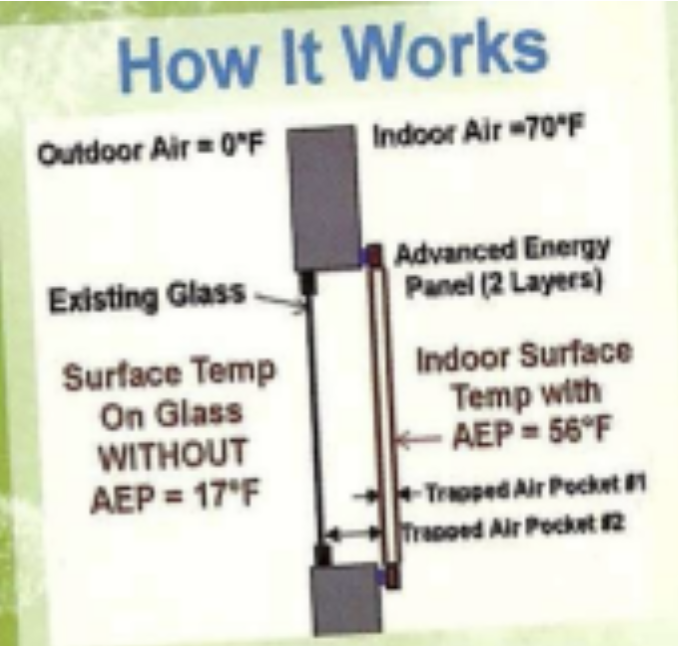
A growing industry of manufacturers and installers are available to do this work for you and MassIPL recommends Skylarc Innovations' Windowtherm panels (https://www.skylarcinnovations.com/) due to their unique product and their experience with HOWs (Houses Of Worship), historic buildings, and other non-standard window shapes and sizes. Windowtherm storm windows are custom made and double glazed, stretching a thin polyolefin film over an aluminum frame. They are light and easy to install or remove. Because of the double layer of plastic film, they have a higher insulating factor than other storm windows.
The graphic below illustrates and quantifies the benefit — when it's 17° outside and 70° inside, the inside surface of the panels remains at 56°. With surface mounted to your window trim, the panels are guaranteed to stop condensation — because the warm air inside the building can't condense on the cold window surface. There are sound-proofing benefits too.
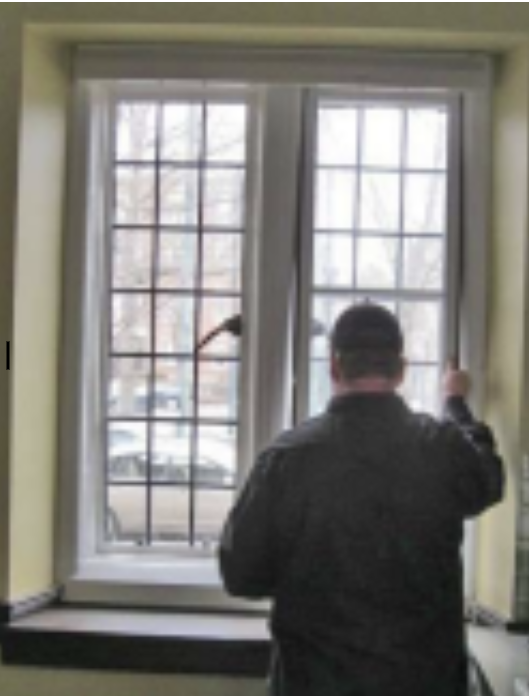
The photo below shows the product being installed of one of those "special/irreplaceable" HOW windows.
Other manufacturers offer a range of styles and different ways they attach to the trim around windows:
But I also thought that I could make these myself…and that if I could, it would be possible for volunteer teams of congregation members to do so for HOWs. The price for professionally made and installed interior "storms" is 3-5x higher than DIY. Assembly and installation is of course DIY. (The photo below is a DIY effort making and installing many interior "storms" in just one day.) If you want to undertake something like this for your home or HOW, here are some practical hints:

I tested out several options for attaching the interior storm windows:
My first window was a hybrid: magnetic strip for the sides and top, and a plastic extrusion for the bottom, which fits flat on top of a window sill (See photo below.) Works well, looks good, but somewhat expensive and time-consuming to build.
In hunting for acrylic sheet suppliers, I happened upon J Freeman in Dorchester, MA (56 Tenean Street, www.jfreeman.com). There are probably similar specialty operators in other large cities. They will custom cut .093" clear acrylic sheets to fit, as compared to buying a stock sized piece at a big-box supplier (such as Home Depot).
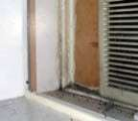
For the next set of windows, I decided to use mechanical means — screws — to fasten the acrylic, and ordinary weatherstripping for air tightness. This too worked well, was easier to assemble — fewer long, thin, adhesive-backed strips which need careful handling and alignment — and less expensive. (See photo below.) Different mounting arrangements are needed, depending on the window configuration. Standard twist drills can cause cracking when making holes in acrylic; a special drill bit for plastic (90° tip angle instead of the standard 118°) helps avoid this.
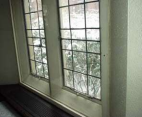
A sturdier version of option #2 is to mount the acrylic on a wood frame, with weatherstripping serving as a seal/gasket between the acrylic and the window frame. (See photo below.) This option adds the cost of the wood, and the time to paint to match. However, it is sturdy, easily installed (and removed in summer if desired) and will last a long time. It also presents the opportunity to meet aesthetic requirements, blending the frame into the finish standard of the window and surrounding space.
My HOW has extremely large (8 ft wide x 25 ft high) Gothic arched windows in the façade. Temperature readings taken in winter showed almost 100% infiltration, i.e. the inside readings at the window edges were basically equal to the outside temperature. Interior storms for these windows are difficult to construct as a DIY project, so you may want to consider buying them from one of the manufacturers listed above. You will need to speak with the manufacturers' customer service team to determine if their style of window will work in your situation.
Original: November 2004. Updated: May 2011, 2014 & 2017 by Tom Nutt-Powell and Jim Nail; September 2021 by Jim Nail
Want to print, share, or view this article offline? Click the link below to download it as stand-alone file.
Recent efficiency gains make air-source heat pumps an excellent choice when it is time to replace a boiler or furnace. See how their cost and carbon footprint compare with oil or gas.

How to create a self-funding budget line for energy and water improvements, then reinvest the savings into future upgrades.

One of the mainstays of reducing your environmental impact. Learn the many materials and programs available.

