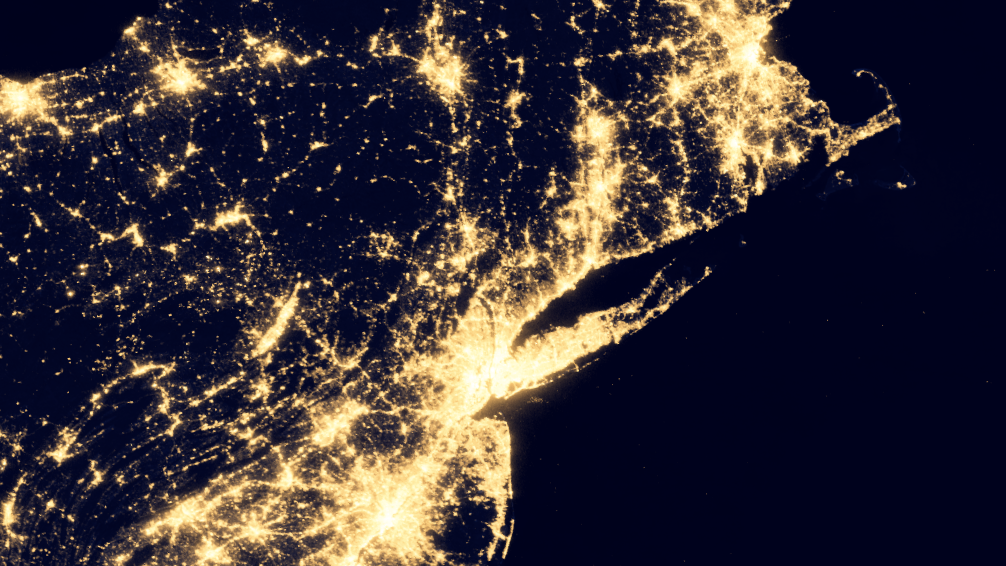


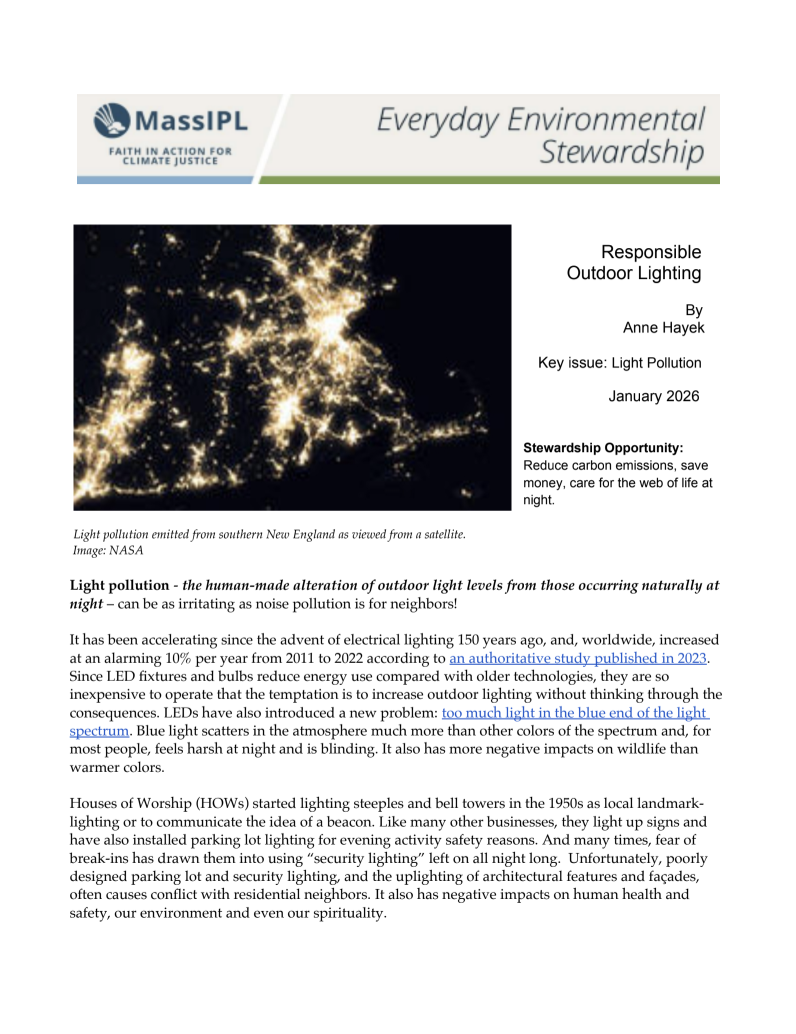
La contaminación lumínica – la alteración artificial de los niveles de luz exterior respecto a los que se producen de forma natural por la noche – ¡puede ser tan irritante como la contaminación acústica para los vecinos!
Se ha acelerado desde la llegada de la iluminación eléctrica hace 150 años y, según un estudio autorizado publicado en 2023, aumentó a un alarmante 10% anual en todo el mundo entre 2011 y 2022. Dado que las lámparas y bombillas LED reducen el consumo de energía en comparación con las tecnologías antiguas, su funcionamiento es tan económico que existe la tentación de aumentar la iluminación exterior sin pensar en las consecuencias. Los LED también han introducido un nuevo problema: demasiada luz en el extremo azul del espectro lumínico. La luz azul se dispersa en la atmósfera mucho más que otros colores del espectro y, para la mayoría de las personas, resulta molesta por la noche y deslumbrante. Además, tiene un impacto más negativo en la vida silvestre que los colores más cálidos.
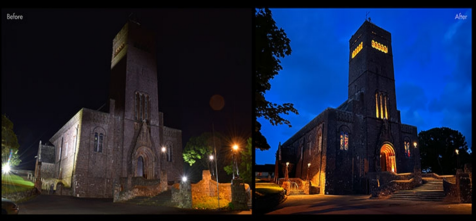
Los lugares de culto comenzaron a iluminar campanarios y torres en la década de 1950 como puntos de referencia locales o para transmitir la idea de un faro. Al igual que muchas otras empresas, iluminan sus letreros y también han instalado iluminación en los estacionamientos por razones de seguridad durante las actividades nocturnas. Y, a menudo, el miedo a los robos los ha llevado a utilizar "iluminación de seguridad" encendida durante toda la noche. Desafortunadamente, la iluminación de estacionamientos y de seguridad mal diseñada, así como la iluminación ascendente de elementos arquitectónicos y fachadas, a menudo causa conflictos con los vecinos residenciales. También tiene impactos negativos en la salud y la seguridad humana, nuestro medio ambiente e incluso nuestra espiritualidad.
La iluminación útil es aquella que ilumina el suelo según sea necesario para la seguridad humana.
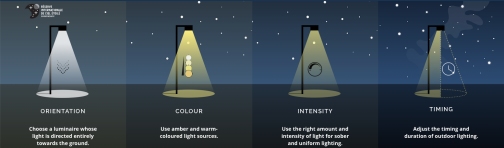
La iluminación exterior responsable busca satisfacer las necesidades de las personas de ver por la noche mientras se ahorra energía, se evitan efectos nocivos en los seres humanos y la vida silvestre, y se protege nuestro cielo nocturno.
Los cinco principios para una iluminación exterior responsable han sido desarrollados por DarkSky International y la Illuminating Engineering Society (IES). La iluminación exterior debe ser:
Al aplicar los cinco principios a nuestros lugares de culto, podemos dar ejemplo a la comunidad, tanto a la nuestra como a las más amplias que nos rodean.
A menudo, las ciudades y pueblos de Massachusetts tienen ordenanzas de iluminación, estatutos generales, estatutos de zonificación o ambos, que reflejan en cierta medida estas pautas sensatas. Para ver si el suyo lo hace y qué implica, consulte la página web de DarkSky Mass sobre ordenanzas.
Con los principios básicos descritos anteriormente, la siguiente pregunta es cómo encontrar una iluminación que se adhiera a ellos.
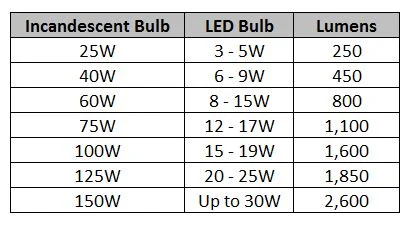
El brillo, o intensidad, se mide en lúmenes. Utilice la menor cantidad de lúmenes necesaria para la tarea. Una luminaria blindada requerirá una bombilla con un 50% menos de lúmenes para obtener la misma cantidad de luz en el suelo que una luminaria sin blindaje. Consulte esta página web de DarkSky Mass para obtener recomendaciones sobre niveles de brillo según la situación.
Las luminarias más modernas con bombilla integrada suelen permitir ajustar la temperatura de color. Utilice el ajuste más cálido (es decir, la temperatura más baja), asegurándose de que sea de 2700K o menos. El tono "ámbar" equivale a 1800–2200K y es similar a las antiguas luces antimosquitos.
Si la luminaria utiliza bombillas reemplazables, lea atentamente la etiqueta del envase para elegir una con una temperatura de color de 2700K o menos y el brillo adecuado para la tarea.
Controles: Los detectores de movimiento, temporizadores y reguladores de intensidad son dispositivos electrónicos que permiten reducir el uso de luz exterior al tiempo y la intensidad estrictamente necesarios. Algunas bombillas llevan detectores de movimiento integrados. Los temporizadores y reguladores suelen incorporarse en el interruptor o en el sistema de control.
¿Desea imprimir, compartir o ver este artículo sin conexión? Haga clic en el enlace a continuación para descargarlo como un archivo independiente.
.png)
Las recientes mejoras en eficiencia hacen que las bombas de calor de fuente de aire sean una excelente opción al momento de reemplazar una caldera o un horno. Descubra cómo se comparan sus costos y su huella de carbono con los del petróleo o el gas.
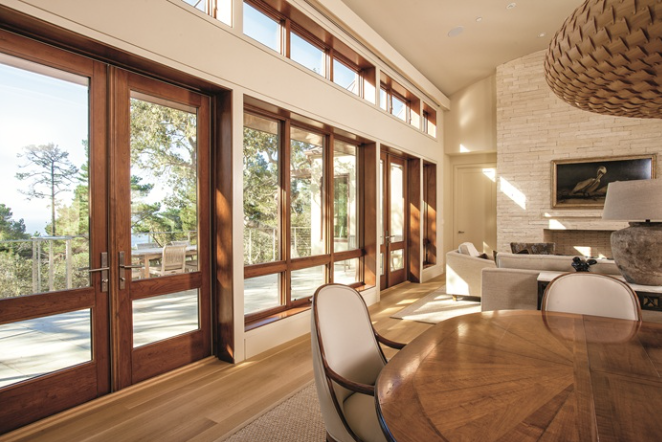
Guía paso a paso para instalar ventanas contra tormentas cuando reemplazar una ventana es imposible, poco práctico o costoso.
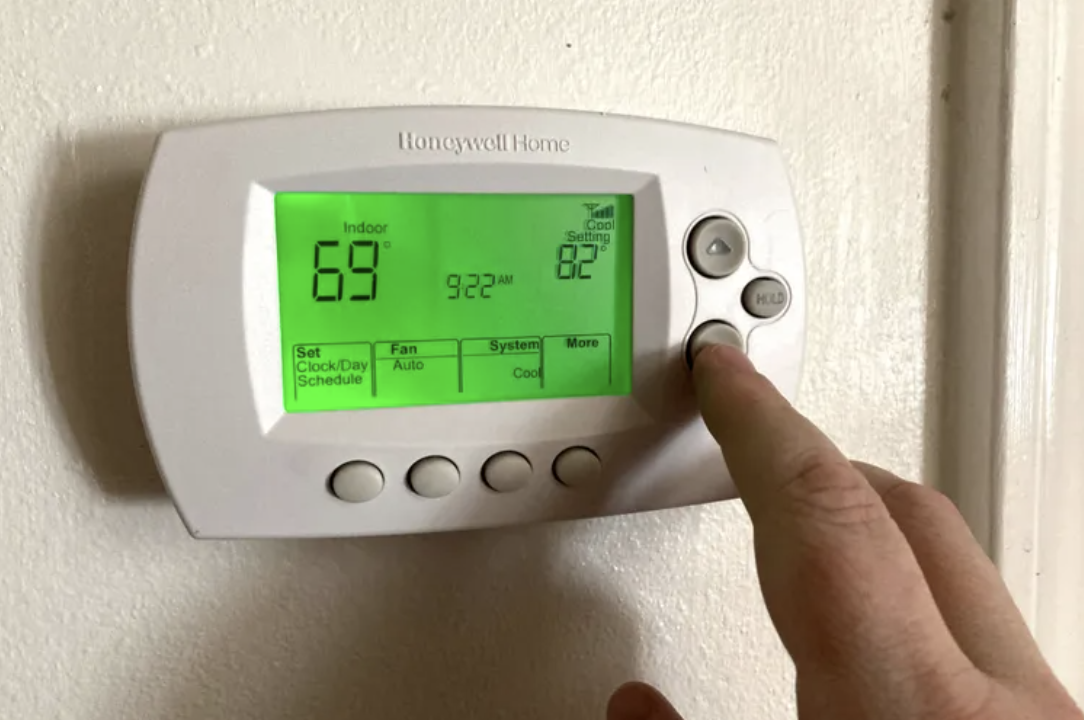
Una forma sencilla y eficaz de reducir los costes de calefacción y refrigeración de su edificio.

