.png)
This piece is part of Sustainable Faith: An Interfaith Season of Creation, a series from MassIPL in which leaders from across Massachusetts' religious and ethical traditions write, in the first person, about how their faith connects with climate. New essays publish each Sunday through October 11th, 2026. Find other essays in this series here.
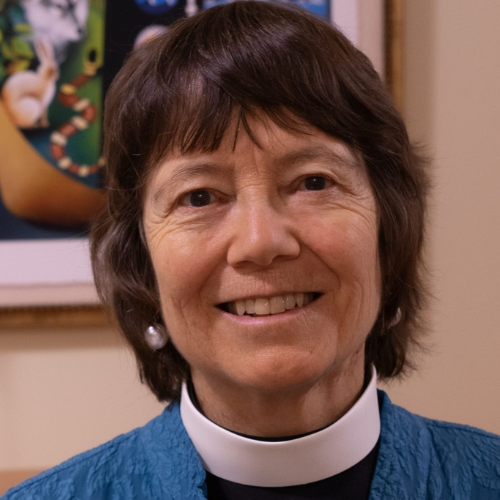
Our son and his wife are expecting their first child. I can’t wait to be a grandmother and to hold this little person in my arms. I anticipate the joy of welcoming him into the world. Yet I also wonder: What kind of world will he inhabit? With fresh appreciation, I remember what a fellow climate activist said many years ago. At the end of his presentation, author and public educator Eban Goodstein looked around the room and slowly announced what all of us want to be able to say to our children and our children’s children:
I give you – polar bears.
I give you – glaciers.
I give you – coral reefs.
I give you – ice shelves as big as a continent.
I give you – moderate weather.
I give you – a stable climate.
“Yes!” I thought to myself after he spoke. “That’s it!” We want to give our children and our children’s children a world that is inhabitable and safe. We want to give them a world in which they can grow and thrive, a healthy world that sustains vibrant life. In short, we want to give them a home. All of us want to have a home and to give our loved ones a home. But our earthly home is in trouble. Some twenty years after hearing Goodstein’s words, I find his message more poignant than ever. Will I be able to give my grandson ice shelves and polar bears, moderate weather and a stable climate? That doesn’t look likely.
The home in which humanity evolved over millennia is rapidly changing. The relentless extraction and burning of coal, gas, and oil has pushed our planet wildly out of balance. Every living system is in decline, and the web of life is unraveling before our eyes. We now live in a world where atmospheric rivers can fill the sky and a month of rain can fall in one day; where wildfires can be so intense that they create their own weather; where hurricanes can be so fierce that we need to create new categories for storms; where the average global temperature keeps going up.
Our planetary home is reeling, and global disruption can touch us on a local level. If we have a home, we can lose it because of hurricanes, wildfires, or rising seas; we can be displaced and join the millions of people worldwide who are on the move because of natural disaster, crop loss, drought, and conflict; or we can remain where we are but suffer from “solastalgia,” a term coined by environmental philosopher Glenn Albrecht to describe the disorienting grief of feeling homesick because the home in which we live has been radically altered or degraded. As the climate changes, the habitable parts of the world are contracting. Humans – along with our more-than-human kin whose habitats are at risk – long for home.
Where is our home? I turn for wisdom to my root tradition, Christianity. Its core claim is both simple and mysterious: the invisible Divine – the Creator and Maker of all who pronounced creation “very good” (Genesis 1:31) – becomes embodied in Jesus because “God so loved the world” (John 3:16). Here is no impassive God that exists at some infinite remove, like a CEO tucked far away on the fourteenth floor who has nothing to do with the hirelings who suffer and labor far below, but rather a God who cherishes the world, who creates it, enters it, redeems it, and sustains it – in short, a God who makes a home in it.
Christianity is a rich tapestry composed of many threads, and some versions of the faith like to stress the strand that speaks of our yearning for a transcendent heavenly home (Hebrews 13:14, Philippians 3:20), declaring that we are “aliens and exiles” (1 Peter 2:11) in this world. However, to my mind these passages don’t give us license to abandon the world that God loved into being; rather, they draw our attention to the sacredness that is hidden within what is mortal, to the invisible that shines out from what is visible, to the formless that takes so many forms, and to the ethical responsibilities that flow therefrom. Heaven is not somewhere else, but right here in the ground beneath our feet, in the cry of the loon, in the wind that blows across the field. What is spiritual indwells the material, and our home is in God, who is everywhere and nowhere in particular, because God has no location.
And if God’s home is here in this world, then I must not turn away from its beauty and pain and lose myself in a virtual realm of entertainment and distraction. If God’s home is here in this world, then I must not lock myself in a bunker, stock up on food and weapons, pull up the drawbridge, and try to survive all alone. If God’s home is here in this world, then I must not succumb to a body-hating, Earth-hating nihilism that fills me with bitter rage to leave behind what we’ve wrecked and head to Mars.
If God’s home is here in this world, then I am summoned to claim kinship with all that lives and to engage in the task of tending and keeping the Earth that God entrusted to human care. For this is the world that God created and loved into being; this is the world into which Jesus was born, the world for which he lived and died. “Make your home in me as I make mine in you,” Jesus says to his friends (c.f. John 15:4). Jesus himself was often on the move (“The Son of Man has nowhere to lay his head,” Matthew 8:20b), yet he invites us to join him in being at home wherever we are and to create a home – a sanctuary, a welcoming space – for those we meet.
Amidst the terror and violence of the world into which Jesus was born, how could he proclaim that the realm of God was near? Because he was rooted in the love of God. Because he knew that nothing could separate him from the love of God. Because he held fast to an unshakeable vision of “the renewal of all things” (Matthew 19:28), a vision of a beloved community living in alignment with God and creating a home of justice and peace. From Jesus’ words and ministry, from his passion, death, and resurrection, a movement sprang up – a movement of passionate men and women committed to the way of self-giving generosity and kindness, dedicated to the truth of love, and devoted to a life of praising and serving God, even if the cost was great.
There is so much to love in this beautiful, broken, and God-saturated world of ours, so much that we want to save. We can’t save it all, but we can commit ourselves to saving everything we can. As I prepare to meet my first grandchild, I feel the power of holding in mind the young people with whom I have a heartfelt connection to the future. Our love for the young people in our lives strengthens our resolve to build a home on Earth for them. We want to protect the conditions that will make their lives safe, peaceful, and possible in the decades ahead.
Maybe we haven’t even met the ones who most count on us to create a home in which all life can thrive. As Terry Tempest Williams writes, “The eyes of the future are looking back at us and they are praying for us to see beyond our own time. They are kneeling with hands clasped that we might act with restraint, that we might leave room for the life that is destined to come.” The eyes that look back at us are the eyes not only of human beings but also the eyes of bees and bats and butterflies, the eyes of tigers, snails, and starfish, of barn swallows and manatees.
The longing for home sends us out to plant gardens and save forests, to install solar panels and build resilient communities, to listen to the voices of indigenous peoples and racial minorities, to push banks to quit funding fossil fuels, to lobby for smart regulations, to vote for climate champions and to protect the right to vote, to stand with immigrants, the persecuted, and the marginalized, and to change our lifestyle – what we buy, what we eat, and how we build and heat our homes. The longing for home draws us to connect with groups that are fighting for a better future. Perhaps it will even impel us to acts of civil disobedience and to spending time in jail.
I imagine God as a Grandmother who welcomes what is tender and small and needs protection. I imagine her fierce love for what she has created and her staunch desire to offer refuge. I imagine her joy when she knows that “The sparrow has found her a house and the swallow a nest where she may lay her young” (Psalm 84:2a).
Editor's note: We are glad to share that Margaret's first grandchild was born earlier this summer, not long after she composed this piece. We wish the family rest and joy as they welcome this new life into the home that we are all still working to build.
We invite you to reflect on the piece you've read using the questions below.


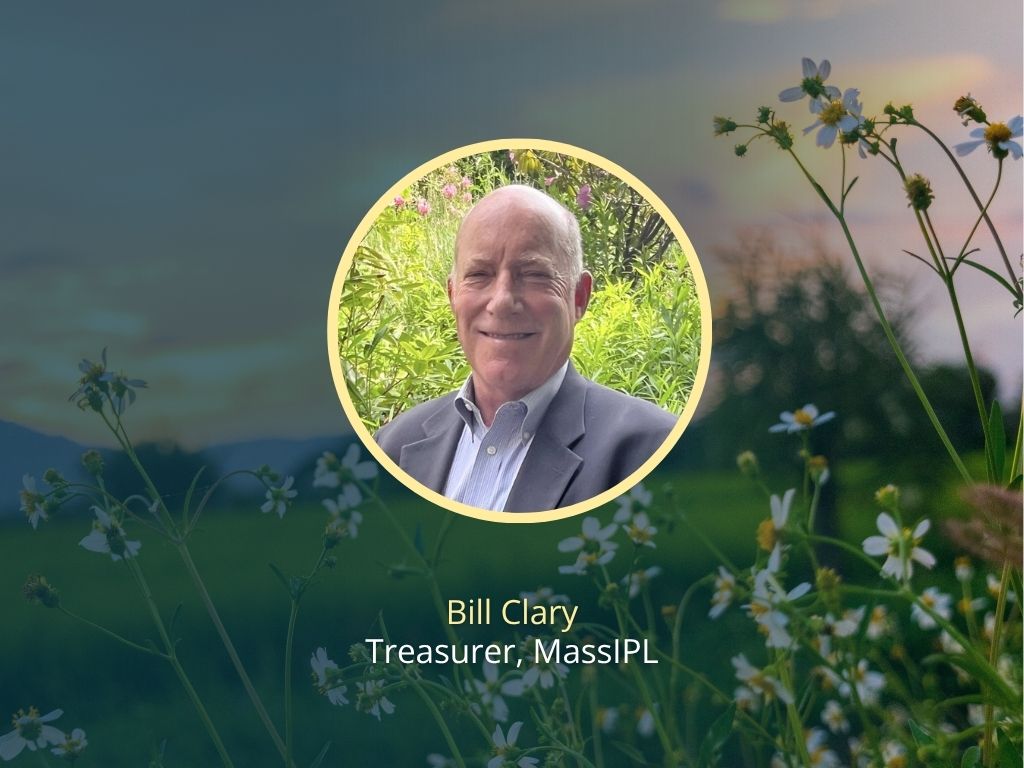
Meet Bill Clary: an engineer and clean energy entrepreneur using algae against carbon pollution, and a builder who believes faith communities can recommit to a shared future.
.png)
Gopal Patel reflects on three bodies of water, the Ganges, Walden Pond, and the ocean, and what each teaches us about the change we're asked to make.