.png)
We are grateful to share this article as part of Sustainable Faith: An Interfaith Season of Creation, a series from MassIPL in which leaders from across Massachusetts' religious and ethical traditions write, in the first person, about how their faith connects with climate. This is the final reflection in the series. Read all "Sustainable Faith" reflections here.
Perhaps it was because I went to bed right after an online session with a group of people fighting against new fracked gas pipelines. I dreamt that I heard a terrible racket, and terrified, I ran to my bedroom window to see what was the matter. Opening the shades, I saw the biggest yellow bulldozer you can imagine, plowing through a field of mature grapevines, heavy with fruit, and ripping them out of the earth. In my dream state, I knew immediately that this was the work of a multinational fossil fuel corporation, and that they meant to put a gas pipeline right there in my backyard, destroying the vineyard in the process!
The scene shifted to a big, bureaucratic building (The State House? The White House? FERC?). Still in my pajamas, I was anxiously searching from room to room, looking for my husband to tell him what was happening in our backyard, and also searching for a lawyer. (Even in a dream, I knew we’d need a lawyer!) But nobody in the building seemed to notice, or to care about what was happening. They all just continued going about their business. I grew more and more anxious, and became completely lost in the maze of rooms.
Then . . . my alarm clock went off! I woke up, relieved and shaken at the same time. At first, the story seemed to be just an anxious allegory. But then I thought, no—it’s a parable! I remembered that in both Hebrew scriptures and in Jesus’ parables in the New Testament, a vineyard often signifies the Kingdom of God, or people and places that belong to God. That means that the Earth itself is one meaning of God’s vineyard. Earth is being devastated by the insistence of powerful people that infinite economic growth on a finite planet is not only possible, but necessary and good, and that clever humans will figure out how to force Earth into complying with ever-increasing human plunder. As a result, the vineyard—God’s people and places, beloved communities, human and more-than-human—is being torn asunder by the bulldozers of human hubris.
Because this is a parable, and not an allegory, it’s not just upsetting. It’s unsettling. We don’t know for certain what it means, or how it ends. There are more possibilities than we can imagine. Do the bulldozers complete their destruction? Do the workers from the vineyard wander the bureaucratic halls in vain? Or do the grapevines, rooted in holy earth, tended by faithful workers, grow to envelop the bulldozers with their delicate tendrils, and gently dismantle them? Or…?
The Kingdom of God is like a vineyard threatened by bulldozers. What will the parable mean? It depends on our imagination, our vision, our actions in community, our faith. It depends on the workers in the vineyard, the vines and earth together, and the One who holds them all. Together, as we learn, pray, and act, we are writing the next chapter of the parable, which has been unfolding over generations. What will its meaning be for our time?
Leaders from across Massachusetts' religious and ethical traditions on how their faith connects with climate.


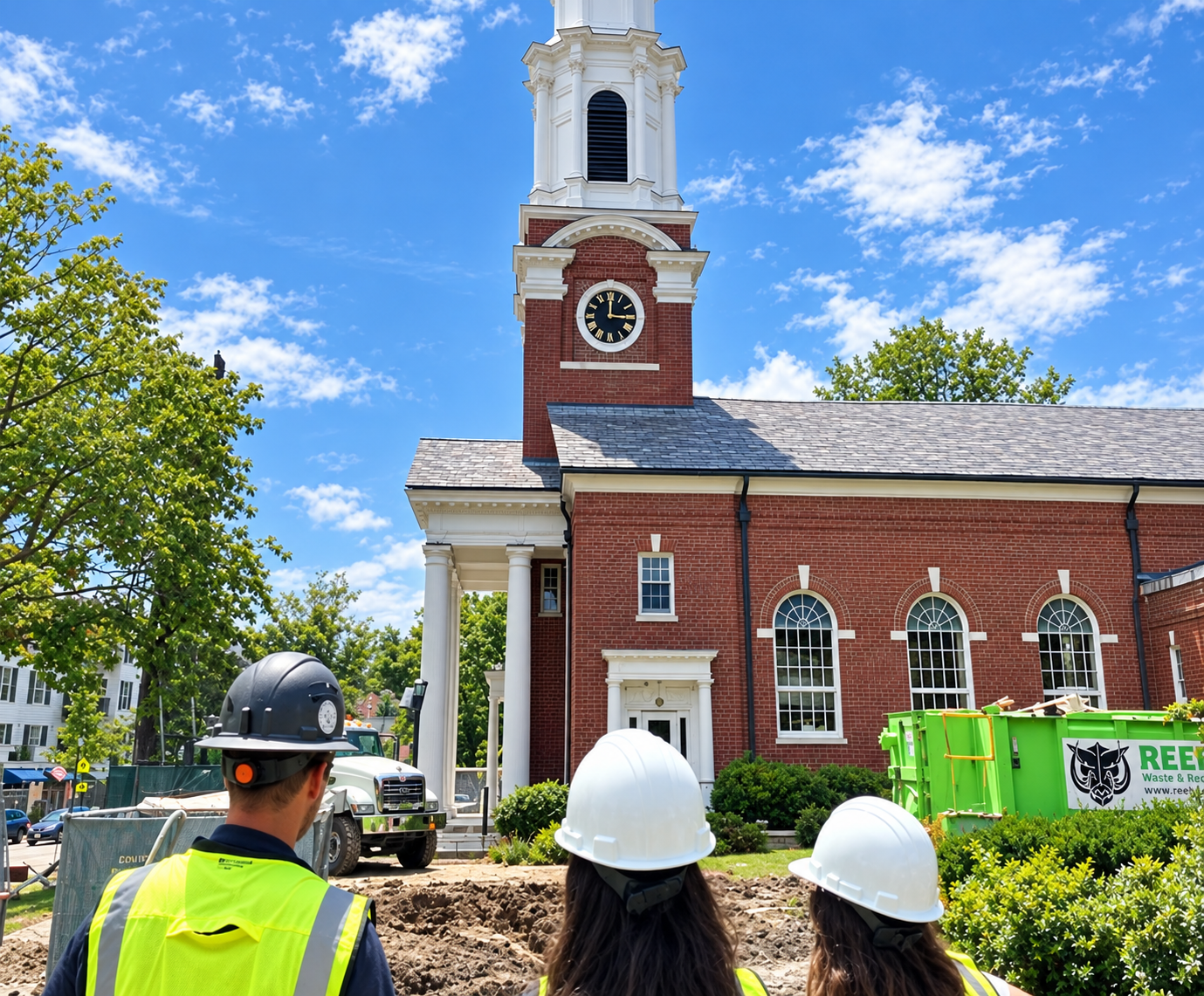
Two new stewardship briefs, a case study, and a webinar recording to help your house of worship explore geothermal heating and cooling.
.png)
Midterms, meditation walks, and solar lights: your October faith & climate roundup.