.png)
We are grateful to share this article as part of Sustainable Faith: An Interfaith Season of Creation, a series from MassIPL in which leaders from across Massachusetts' religious and ethical traditions write, in the first person, about how their faith connects with climate. New essays are published each Sunday through October 11th.
In 2016, wildfires swept through the part of western North Carolina I grew up in. The area had been suffering severe drought as a result of climate change. Typically, it is considered a temperate rainforest, with daily afternoon thunderstorms through the summer. But not that year. I was living in Massachusetts at the time, just starting out as an organizer as part of the Jewish Organizing Fellowship, and I remember scrolling through news reports and pictures, looking at the charred remains of my favorite places in the world, overcome by helpless, incredulous grief. I tried to explain this to people I was getting to know in organizing circles, and was often met with a common phrase among activists: “don’t mourn, organize!”
I am relatively new to climate work. But I am not new to climate grief, climate dread, or climate anger. Why should we have to live with the havoc wreaked by climate change when we were not the ones who designed this society to run on extracting and burning fossil fuels? I have spent a lot of time feeling demoralized and helpless, realizing that my own individual actions will not be enough to stop this crisis. It can feel horribly unfair to know that I am doing all I can as an individual, and yet I still have to live with extreme heat, drought, floods, wildfire smoke, and devastating storms.
I am also not new to activist burnout. I have been part of communities that urge each other to put these messy and overwhelming feelings aside and instead focus on the work, on the solutions, on doing something. Don’t mourn, organize. In my experience, years of not mourning will eventually catch up with you. When the losses keep coming, as they do with a warming, melting, flooding, burning world – and we don’t take time to grieve, it can leave us exhausted and sap our belief in the effectiveness and possibility of organizing and collective action.
For me, Judaism provides a path out of despair, and into action. Our tradition has a lot to say about mourning. We call the initial period of bereavement Shiva, or “seven,” because the first seven days after a loss are set aside for simply grieving. During Shiva, friends and community members surround the mourner with support, food, comfort, and prayer. After those first seven days, mourners are supported to not get stuck in their grief, but to gradually re-enter normal life. In the context of life on a climate-changing planet, and in organizing to build a better world, this Jewish wisdom still rings true: take time to grieve (or be angry or afraid or overwhelmed), lean on and learn from community, and take your next steps to be in and build the world we want. Doing so has been an important and necessary practice for me. It allows for renewal, reflection, honoring the people and places we have lost, and recommitting to the possibilities that still exist for a better future. Taking time to grieve can help us be open to new possibilities, and to remember what it is that we are working towards.
Jewish tradition does not believe in grieving alone. The Kaddish, a prayer that is said for mourning, must be said in a group. Similarly, I don’t find it productive or helpful to sit alone in my grief or anger about climate change. When I have been in spaces where no one wants to talk about climate emotions or where discussion of grief or anger is avoided as “dooming,” it can feel dismissive and isolating on many levels. But when I can share this grief and this anger with others who feel it, when we can take the time to express and reflect on those feelings, they do not calcify into despair and inaction. Rather, our connections to each other and commitment to act are made stronger, and we can move forward into collective action together.
The way many of us have been conditioned to think about climate and the environment is through a highly individual lens. We talk about what can be done to reduce our individual carbon footprint; the burden of plastic pollution is placed on the individual who is encouraged to recycle; people show their commitment to combatting climate change through consumer choices, diet, personal commitments, and lifestyle changes. Some of us get angry because we, as individuals, personally, didn’t cause this. But the fact is that this crisis was not created on the level of individual action, and cannot be solved by individual action. The unfortunate reality is that if I, Lenny Somervell, did everything I as an individual could possibly do to live a climate-conscious life, greenhouse gases would still be pumped into the atmosphere, the temperature and the sea levels would still rise, storms would still devastate our communities, and wildfires would continue to burn out of control. It can seem like nothing I do would matter, so what’s the point?
The antidote to this kind of despair, for me, is found in Jewish frameworks. Being Jewish is a community practice. There are very few aspects of it that you can observe alone. For many of our most important observances and practices, it is required they are performed in a group of other Jews (a minyan). This extends to things like responsibility for shortcomings. In the vidui, the confession of sins, on Yom Kippur, we say “we have sinned,” rather than “I have sinned.” The responsibility for wrongs is borne collectively, not individually. When I think about the connection between being Jewish and the climate, this is what comes to mind for me. I did not create this extractive and harmful system, and alone there is little I can do to transform it. But the responsibility for where we are, and the responsibility to repair it, is not mine alone. We created this system, we live with it, we suffer and benefit from it, and it is our responsibility to take action to repair it.
Just as we need a community to do so many things as Jews, just as we cannot pray or celebrate or mourn alone, we also can’t be climate activists alone. To do something about climate change on a level that will have an impact, we need a minyan (a prayerful community). We must stop asking ourselves “what can I do.” Our power, like our responsibility, is collective. I alone cannot pass legislation to decarbonize Massachusetts. I alone cannot build a windfarm or a solar farm. I can’t even do much to mitigate the effects of extreme heat on my neighbors, or make sure communities have the tools they need to prepare for and respond to more frequent and severe disasters. I can’t easily support myself in my grief, say the Mourner’s Kaddish, nor celebrate Jewish holidays and festivals alone. But I can join together with others. And as a community acting together, can build a green, equitable, just, and livable future by building power to make change on a level far beyond what we can do as individuals. Together, we can not only act, but can support and sustain each other for the road ahead.
Rabbi Laura Bellows, Director of Spiritual Activism & Education, Dayenu: A Jewish Call to Climate Action, www.dayenu.org
This September, Jewish communities in Massachusetts and around the world observe the High Holidays, a series of holy days that celebrate the new year and call us to recommit to our best selves and to building the world as it could and should be. One of the pivotal, ancient prayers of the Yom Kippur liturgy asks: In the coming year, “who shall live and who shall die? Who by fire and who by water? Who in poverty and who in wealth?” These questions ring more true than ever in the context of the climate crisis and the many intersecting challenges of our time. We could add: Who will live with rising waves and who will die in heatwaves. Who will bear the burden of data centers, and who will organize for more resilient solutions? The High Holiday liturgy also offers an answer: Through our tefilah, teshuva, and tzedakah – prayer, turning from old ways to better practices, and acting for a more just world – will we ease the way.
As we enter what we hope will be a sweet and whole new year, there is also a custom of remembering our ancestors, thinking of those yet to come, and celebrating in the present with community – and honey-filled treats! In the year ahead, may we draw wisdom from the movement ancestors who came before us, motivation from those who will come after, and strength from the incredible people power we are building together now.


.png)

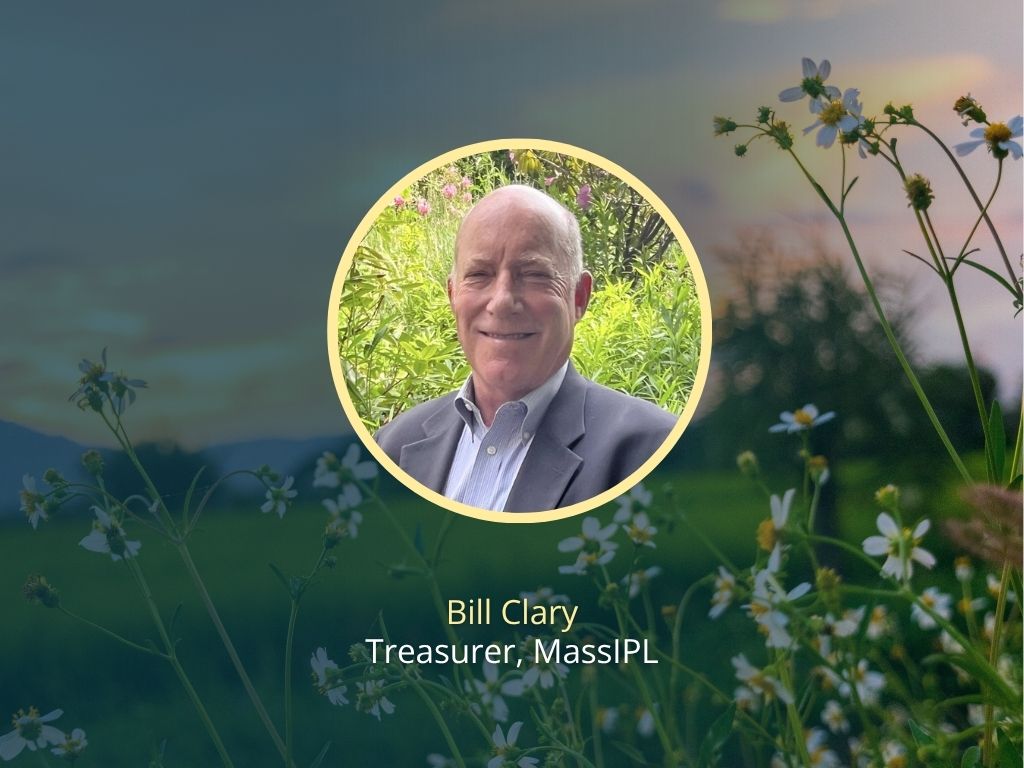
Meet Bill Clary, MassIPL's new Board Treasurer: an engineer and clean energy entrepreneur turning algae into a tool against carbon pollution, and a builder who believes faith communities can recommit to a shared future.
.png)
Gopal Patel reflects on three bodies of water, the Ganges, Walden Pond, and the ocean, and what each teaches us about the change we're asked to make.